

Professional salon furniture is no longer just about looks. In 2026, salon owners, distributors, and beauty investors are choosing equipment based on ROI, durability, compliance, and supplier reliability. If you are planning a new salon, upgrading treatment rooms, or sourcing for wholesale distribution, the right furniture can improve client comfort, staff efficiency, and long-term profitability.
Buyers now compare more than price tags. According to Grand View Research, the professional beauty equipment market continues to grow in 2026, while Statista reports that operators increasingly evaluate equipment by lifetime value and treatment-room utilization. That means a cheap chair that fails in 18 months may cost more than a better-built unit that performs for 5-8 years.
For B2B buyers, factory-direct sourcing is becoming more attractive. IBISWorld notes that beauty businesses often compare manufacturers against distributors to cut procurement costs and gain more customization flexibility. This is where working with an experienced supplier such as Yoocell can make a clear difference, especially for bulk orders, OEM/ODM projects, and global shipping needs.
In this guide, we break down how to choose the right salon furniture, typical price ranges, the most durable materials, and what to ask before placing an order.
What is included in professional salon furniture?
Professional salon furniture includes the core fixtures and functional equipment used in hair salons, beauty studios, spas, barber shops, and skincare treatment spaces.
Typical categories include:
- Styling chairs
- Shampoo beds and backwash units
- Reception desks and waiting chairs
- Styling stations and mirrors
- Trolleys and storage cabinets
- Facial beds and esthetician chairs
- Technician stools
- Manicure and pedicure furniture
For commercial use, furniture should be built for high-frequency operation. In busy salons, a styling chair may be used 10-20 times per day, which can add up to more than 3,500 service cycles annually. That is why commercial-grade frames, hydraulic systems, upholstery, and base stability matter more than showroom appearance alone.
How to choose professional salon furniture for long-term ROI
The best professional salon furniture should support revenue generation, brand image, and operational efficiency. Buyers should evaluate each item as a business asset, not only as décor.
Use these criteria when comparing options:
- Durability: Check frame material, weld quality, base weight, pump life, and upholstery resistance.
- Comfort: A chair used for 45-90 minute services must support both client and technician comfort.
- Cleaning: Surfaces should resist stains, oils, hair dye, disinfectants, and daily wiping.
- Space efficiency: Good layout can improve treatment-room utilization by 10%-15% in small salons.
- Customization: Color, branding, dimensions, and matching collections help create a consistent interior identity.
- After-sales support: Spare parts, assembly guidance, and warranty response reduce downtime.
For example, if a salon saves 12% to 25% on procurement through factory-direct sourcing and extends replacement cycles from 3 years to 5 years, the total ownership cost can drop significantly. This is one reason many distributors and chain buyers prefer direct manufacturing partners.
Yoocell supports this model with factory-direct pricing, OEM/ODM options, quality control processes, and shipping support for international B2B clients.
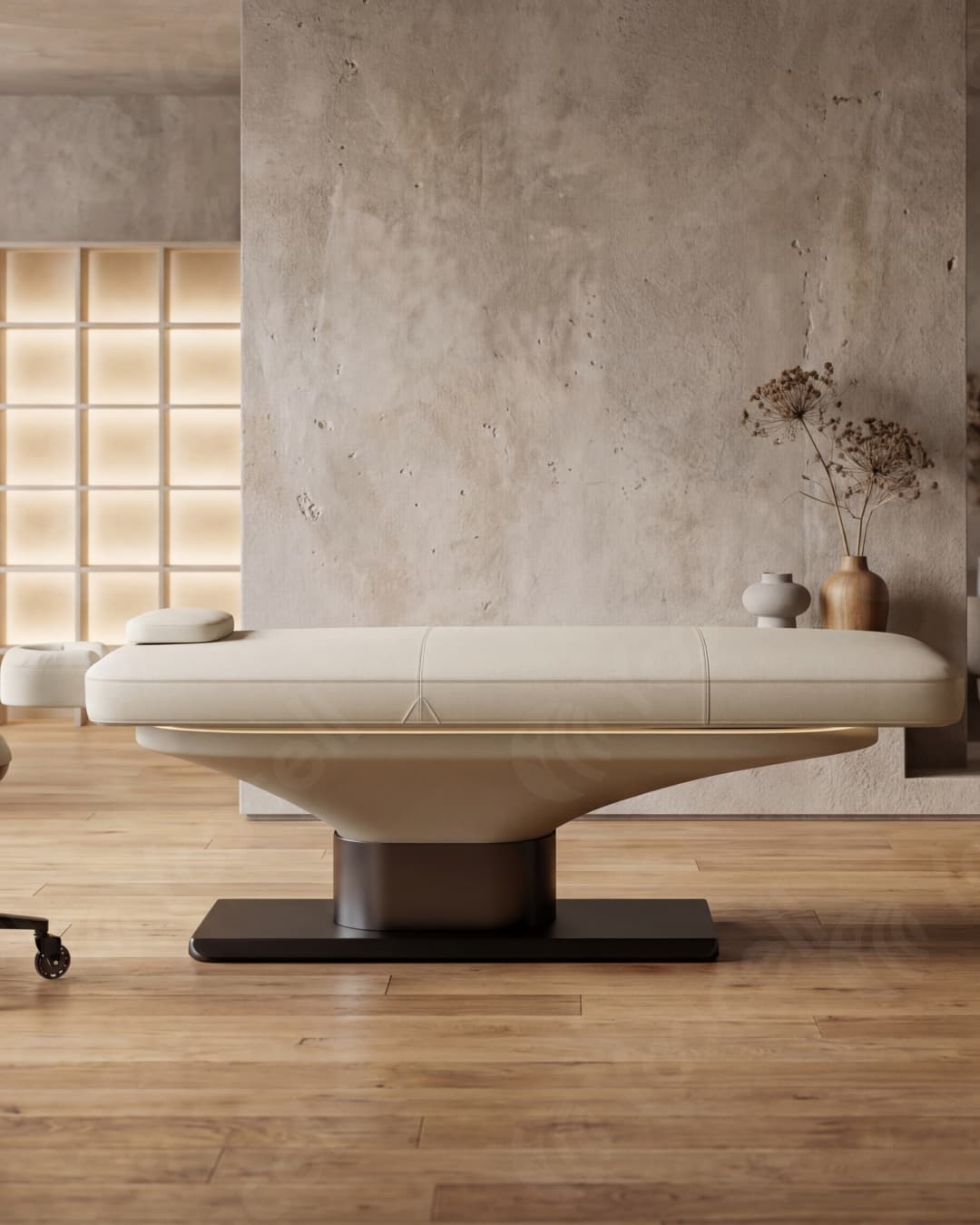
How much does salon furniture typically cost?
Salon furniture pricing varies by material, function, quantity, and whether you buy from a retailer, wholesaler, or manufacturer.
Typical 2026 B2B reference ranges include:
- Styling chairs: about $120-$450 per unit for standard commercial models
- Shampoo units: about $350-$1,200 depending on basin, plumbing design, and chair structure
- Reception desks: about $300-$1,500 based on size and finish
- Styling stations: about $150-$900 per station
- Facial beds: about $250-$1,800 depending on electric functions and upholstery grade
- Technician stools: about $50-$220
A small salon setup may start around $3,000-$8,000 for basic furniture, while a premium full-service salon or spa can easily exceed $15,000-$40,000. Multi-location chains and distributors often focus less on unit price and more on landed cost, replacement rate, and consistency across projects.
Factory-direct suppliers can reduce markups often added by importers, showrooms, and resellers. In many cases, bulk buyers may achieve procurement savings of 10%-30%, especially on mixed-container or customized orders. Yoocell works with B2B buyers that need both cost control and customization support.
What salon furniture is most durable?
The most durable salon furniture usually combines strong internal structure, commercial-grade upholstery, and easy-maintenance finishes. Not every attractive product is designed for repeated daily use.
Look for these durability signals:
- Steel or reinforced metal frames instead of light, unstable structures
- Heavy-duty hydraulic pumps for styling chairs
- PU or high-grade synthetic leather with stain and chemical resistance
- Ceramic or high-quality composite basins for shampoo units
- Moisture-resistant MDF or metal cabinetry for stations and storage
- Scratch-resistant coatings on high-contact surfaces
In practical terms, a well-made hydraulic styling chair can often remain serviceable for 5-8 years with routine maintenance, while lower-grade units may show pump instability, torn upholstery, or loose armrests within 12-24 months.
Durability also depends on cleaning protocols. Frequent exposure to peroxide, tint, acetone, oils, and disinfectants can degrade weak materials quickly. Buyers should request material specs and test standards before ordering large volumes.
Yoocell helps B2B customers align design with performance, which is especially useful for salons that need matching furniture collections without sacrificing commercial durability.
Why factory-direct sourcing matters for salons and distributors
Factory-direct sourcing gives buyers more control over price, specifications, lead times, and branding. For salons, this can mean better value. For distributors, it can mean stronger margins and product differentiation.
Key benefits include:
- Lower procurement cost: fewer middleman markups
- Customization: upholstery color, logo, packaging, dimensions, and collection design
- OEM/ODM support: ideal for private label or market-specific product lines
- Bulk order efficiency: better planning for chains, dealers, and project buyers
- Consistent quality control: direct communication with the manufacturing side
According to IBISWorld, businesses increasingly compare factory-direct suppliers with traditional distributor channels to improve sourcing flexibility. That matters when a buyer needs 50 matching chairs, a custom reception desk color, or a packaging solution for resale.
Yoocell is positioned well for this B2B requirement because it combines beauty salon equipment manufacturing with skincare OEM/ODM capability. This is useful for clients building complete salon or spa concepts, where furniture, treatment support, and branded products may need to align.
Beyond pricing, direct sourcing can also shorten revision cycles on samples and packaging. For many buyers, that can reduce launch delays by several weeks compared with fragmented sourcing from multiple vendors.
What certifications and compliance signals should buyers check?
For salon furniture and related beauty products, trust signals matter. Buyers should look for suppliers that understand documentation, production standards, and market requirements.
Important references include:
- ISO 22716: important for cosmetic GMP practices in skincare OEM/ODM production
- GMP: shows process discipline and manufacturing consistency
- FDA cosmetic guidance: relevant when sourcing skincare products alongside salon furniture
- Product documentation: specifications, packing lists, material details, and maintenance guidance
- Quality control records: inspection procedures and defect handling processes
While furniture itself may not require the same documentation as topical skincare, many salon buyers now source both equipment and private label products together. In those cases, supplier capability across categories becomes a major advantage.
Yoocell naturally fits this need as a beauty salon equipment manufacturer and skincare OEM/ODM supplier. For buyers building brand ecosystems, this can simplify vendor management and improve consistency across launch planning, compliance communication, and global shipment coordination.
How to compare suppliers before placing a bulk order
If you are selecting a supplier for professional salon furniture, ask direct questions that reduce risk before production starts.
Use this checklist:
- Can you provide product specifications and material details?
- What is the warranty policy for pumps, frames, and upholstery?
- What is the average lead time for sample orders and bulk orders?
- Do you support OEM/ODM customization?
- How do you handle pre-shipment quality inspections?
- What are the shipping options for my region?
- Can spare parts be supplied after delivery?
- Do you have experience with distributors, chain salons, or project buyers?
A reliable partner should answer clearly and provide practical documentation. That includes dimensions, carton size, weight, loading quantity, maintenance instructions, and quality-control steps. If a supplier cannot explain these details, the buyer risk is higher.
For international sourcing, it also helps to choose a company that understands global shipping, packaging protection, and communication across time zones. Yoocell supports B2B buyers with manufacturing support, customization options, and professional after-sales service. If you are comparing suppliers for an upcoming project, you can contact the Yoocell team here for product and sourcing support.
FAQ: professional salon furniture
1. How much does salon furniture typically cost?
Basic salon furniture packages may start around $3,000-$8,000, while premium full-service setups often range from $15,000 to $40,000 or more. Bulk factory-direct orders can reduce unit costs.
2. What salon furniture is most durable?
Commercial-grade furniture with steel frames, heavy-duty hydraulic pumps, chemical-resistant upholstery, and stable bases is usually the most durable. Well-built chairs often last 5-8 years with maintenance.
3. What brand do most salons use?
There is no single universal brand. Many salons choose based on budget, style, support, and availability. Increasingly, B2B buyers prefer factory-direct manufacturers for better pricing and customization.
4. Where can I find salon furniture for sale?
You can buy from online retailers, local distributors, trade suppliers, or direct manufacturers. For bulk orders and custom projects, factory-direct sourcing is often the most cost-efficient option.
5. Is OEM/ODM salon furniture a good choice for distributors?
Yes. OEM/ODM allows distributors to create private label lines, customize finishes, and tailor specifications to local market demand, which can improve margins and differentiation.
6. What should I ask before ordering from a salon furniture supplier?
Ask about materials, warranty, lead time, quality control, shipping terms, spare parts, customization, and after-sales support. These factors affect total ownership cost more than the initial quote alone.
Final thoughts
Buying professional salon furniture is a strategic business decision. The right supplier helps you balance aesthetics, durability, cost control, and brand positioning. In 2026, the strongest buyers are focusing on lifetime value, not just upfront price.
If your business needs factory-direct pricing, OEM/ODM flexibility, global shipping, and dependable manufacturing support, Yoocell offers a practical B2B solution. With a focus on quality control, customization, and scalable supply, Yoocell can support salons, distributors, and beauty brands looking for reliable commercial furniture and related beauty manufacturing services.