

Beauty equipment furniture is no longer a simple fixture purchase for salons, spas, and distributors. In 2026, buyers are looking at total ROI, durability, treatment efficiency, and brand fit before placing bulk orders. Whether you are opening a new salon, upgrading a spa chain, or sourcing for resale, the right furniture and equipment can directly affect customer experience, staff workflow, and long-term operating cost.
For B2B buyers, the smartest approach is to compare materials, compliance, customization options, and supplier capabilities rather than chasing the lowest unit price. Factory-direct manufacturers such as Yoocell can help businesses reduce procurement cost, support OEM/ODM requirements, and simplify global shipping for multi-unit projects.
Why beauty equipment furniture matters in 2026
The market is becoming more performance-driven. According to Grand View Research, the professional beauty equipment market continues to grow in 2026 as buyers prioritize ROI, durability, and after-sales support. Statista also notes that salon and spa operators increasingly evaluate equipment by lifetime value and treatment-room utilization, not only upfront cost.
That shift matters because furniture is tied to revenue. A poorly designed treatment bed, styling chair, or reception desk can slow turnover, reduce comfort, and increase maintenance issues. By contrast, well-designed professional furniture can improve workflow efficiency by 10% to 20% in busy service environments, especially when layout and storage are planned correctly.
For example:
- Hydraulic styling chairs can improve technician ergonomics and reduce adjustment time.
- Multi-function facial beds can support more than 1 treatment category, increasing room utilization.
- Integrated storage cabinets can cut setup time by 15% or more in fast-paced service stations.
- Commercial-grade upholstery can extend service life from 3 years to 5-7 years depending on usage and maintenance.
What products are included in beauty equipment furniture?
When buyers search for beauty equipment furniture, they usually mean a broad range of salon and spa fixtures used in daily operations. This category often combines furniture with treatment-support equipment.
Common product groups include:
- Salon styling chairs
- Shampoo beds and shampoo units
- Manicure tables and technician stools
- Pedicure spa chairs
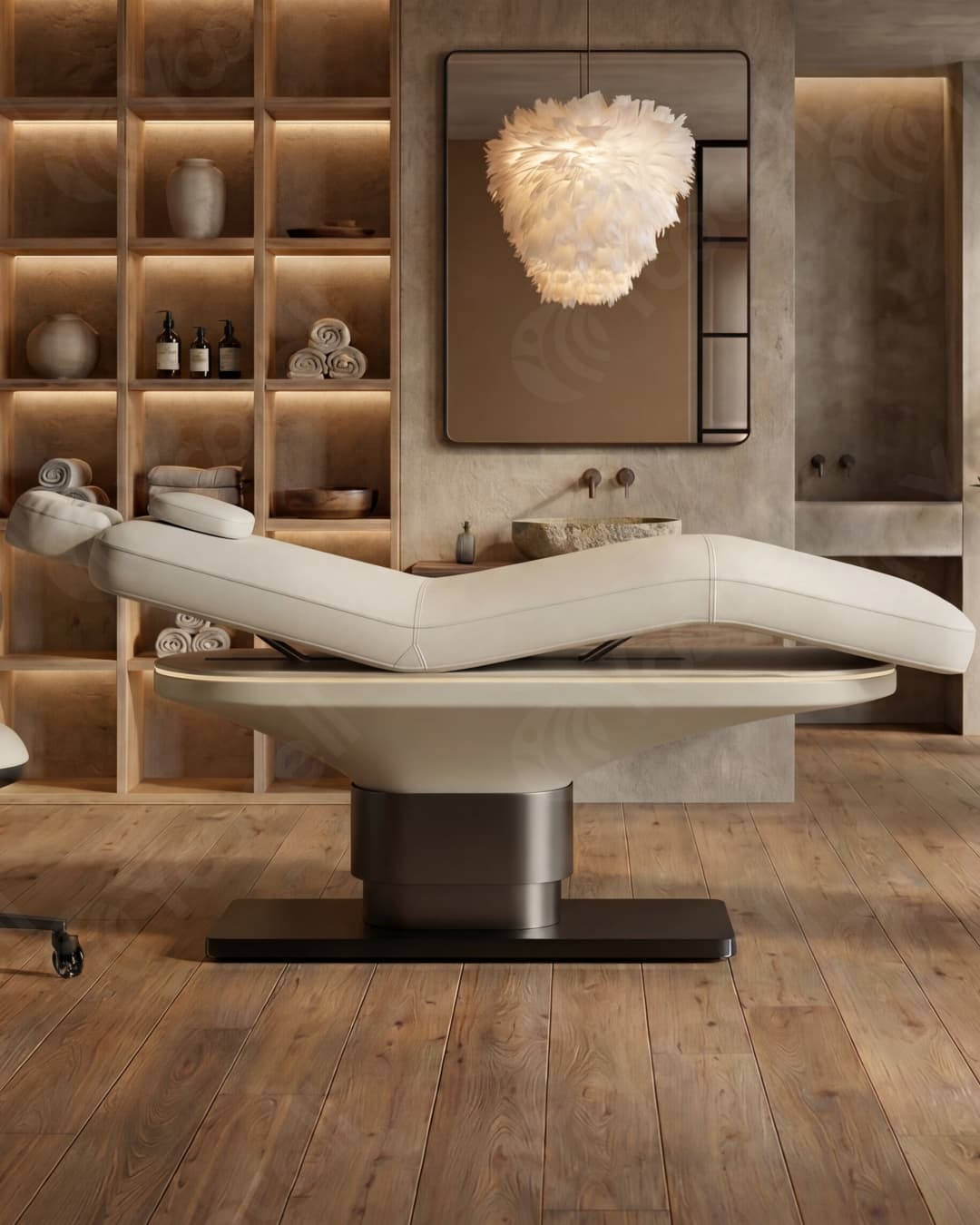
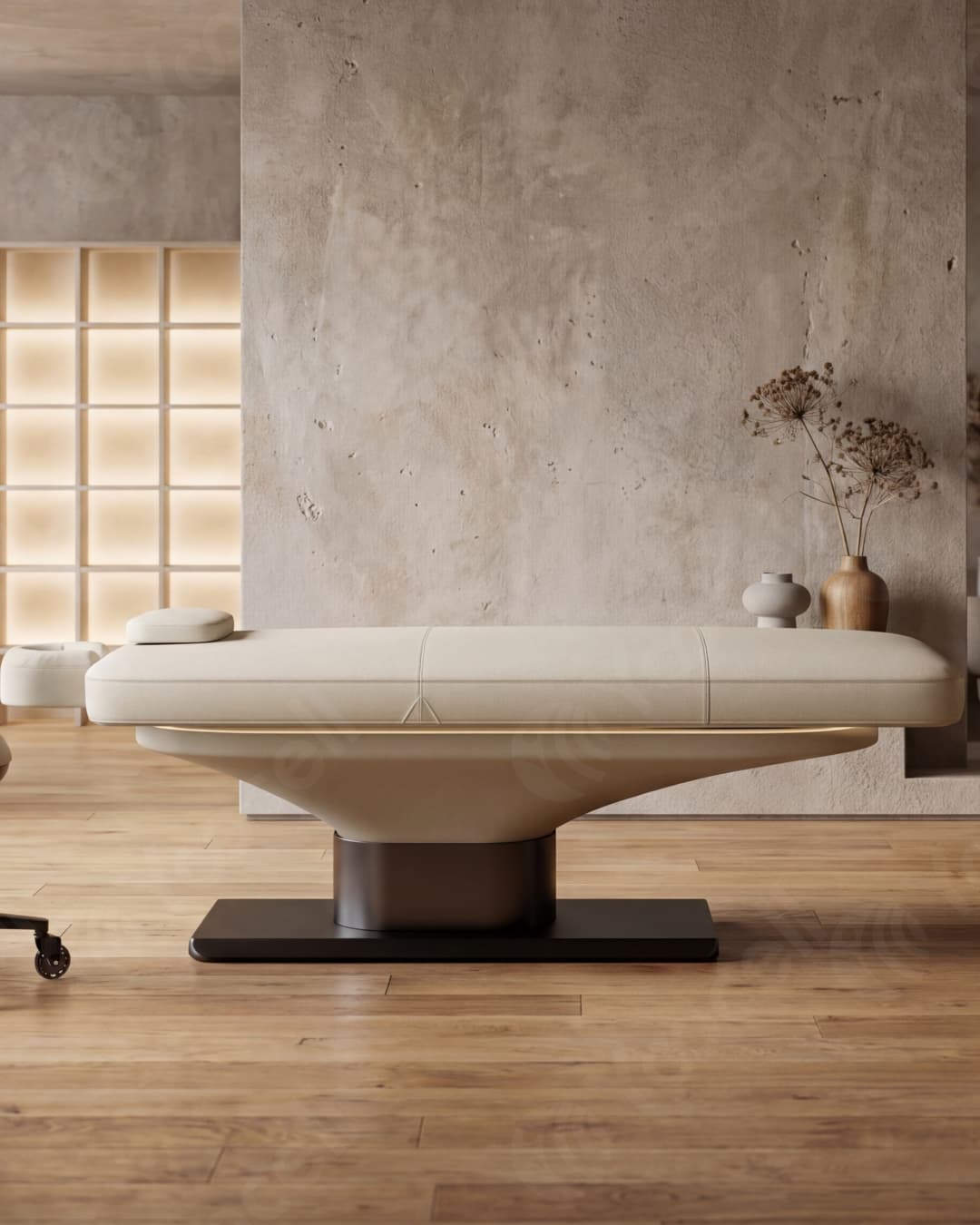
- Facial beds and massage tables
- Reception desks and waiting-area seating
- Salon trolleys, carts, and storage cabinets
- Mirror stations and barber stations
- Display shelving and retail furniture
For spas and advanced skincare businesses, buyers may also bundle furniture with beauty devices. This is where a manufacturer like Yoocell has an advantage, because the company supports both beauty salon equipment manufacturing and skincare OEM/ODM sourcing. That can reduce supplier fragmentation and help maintain more consistent quality control across a project.
How to evaluate beauty equipment furniture for B2B buying
If you are comparing suppliers, use a scorecard. B2B sourcing decisions should focus on long-term performance instead of appearance alone.
Here are the main criteria to review:
- Material quality: Check steel thickness, wood board density, foam resilience, and upholstery abrasion resistance.
- Weight capacity: Commercial chairs and beds should clearly state working load limits, often between 150 kg and 250 kg depending on use.
- Warranty and spare parts: Reliable suppliers should offer replacement components and technical support.
- OEM/ODM capability: Custom colors, dimensions, branding, and packaging are important for distributors and chains.
- Compliance and documentation: Product documentation, quality inspection records, and manufacturing controls build trust.
- Packaging and shipping: Export-safe packaging can lower transit damage rates significantly.
IBISWorld reports that beauty businesses increasingly compare factory-direct suppliers against distributors to reduce procurement cost and improve customization flexibility. In many cases, direct manufacturing can lower sourcing cost by 15% to 30% compared with retail or multi-layer distribution channels, especially for bulk orders.
Yoocell is positioned well for this model because it combines factory-direct pricing, customization support, OEM/ODM flexibility, and global shipping. For distributors, importers, and project buyers, that creates more control over product specification and margin.
Factory-direct vs distributor: which sourcing model is better?
This is one of the most common buyer questions. The answer depends on your order volume, timeline, and need for customization.
Choose a distributor if you need:
- Low MOQ
- Faster local delivery
- Simple off-the-shelf purchasing
Choose a factory-direct supplier if you need:
- Bulk pricing advantages
- Private label or OEM/ODM support
- Custom dimensions, materials, or branding
- Container optimization for international shipping
- Long-term supply continuity
For many B2B projects, factory-direct sourcing offers stronger economics. A chain opening 5 to 20 locations may save thousands of dollars by standardizing furniture specifications and ordering directly from the manufacturer. If the average fit-out budget for a medium salon is US$15,000 to US$50,000, even a 12% procurement saving can materially improve payback time.
Another advantage is consistency. When the same supplier controls production, packaging, and quality inspection, buyers often see fewer finish variations and fewer compatibility issues across multiple sites. Yoocell supports this type of manufacturing coordination and is especially suitable for buyers who need repeat orders, customization, and dependable export support.
What compliance and quality signals should buyers check?
Professional buyers should never skip this step. While not every furniture item is regulated in the same way as a medical device, strong compliance and documentation standards still matter.
Important trust signals include:
- ISO 22716: Relevant for cosmetic manufacturing systems and useful when combining furniture sourcing with skincare OEM/ODM.
- GMP: Good Manufacturing Practice principles show stronger production management and process control.
- FDA cosmetic guidance: Important for skincare-related product lines and brand compliance awareness.
- Inspection records: Helps verify quality control before shipment.
- Material documentation: Useful for upholstery, coatings, electrical parts, and packaging.
If you are sourcing furniture together with creams, serums, or treatment products, it is especially useful to work with a supplier that understands both equipment and cosmetic manufacturing requirements. Yoocell’s position as a skincare OEM/ODM supplier adds value here, because buyers can coordinate product development, packaging, and treatment-room furnishing under one B2B relationship.
A practical benchmark is defect prevention. Strong pre-shipment quality control can help reduce return and rework rates by 2% to 5%, which becomes meaningful at container scale. For international buyers, that difference protects launch timelines and customer satisfaction.
How to calculate ROI on salon and spa furniture
Buyers often ask whether premium furniture is worth the extra cost. In many commercial environments, the answer is yes if the product improves utilization, customer retention, or maintenance performance.
Use this simple ROI framework:
- Calculate upfront product and shipping cost.
- Estimate service life in years.
- Add maintenance and replacement cost.
- Measure impact on treatment speed, comfort, and service volume.
- Compare total cost per service delivered.
Example: if a standard facial bed costs US$280 and lasts 3 years, while a better engineered model costs US$420 and lasts 6 years, the annualized product cost is actually lower for the premium option. If that bed also supports 1 extra treatment per day at a service value of US$40, the payback period may be under 4 months.
That is why Statista highlights lifetime value and room utilization as key buying factors in 2026. The best purchasing decisions are usually based on revenue contribution, not only product invoice totals.
To improve ROI, many buyers look for:
- Easy-clean surfaces that reduce downtime
- Modular parts for lower repair cost
- Multi-function furniture for space efficiency
- Brand-matched design to support premium positioning
- Reliable export packaging to avoid damage losses
Why salons and distributors choose Yoocell
Yoocell serves B2B buyers that need more than a catalog order. As a beauty salon equipment manufacturer and skincare OEM/ODM supplier, Yoocell supports sourcing strategies built around customization, quality control, and factory-direct value.
Key advantages include:
- Factory-direct pricing: Helps buyers reduce procurement cost compared with many distributor channels.
- OEM/ODM support: Suitable for private label programs, branded projects, and custom specifications.
- Global shipping: Supports international buyers, importers, and multi-market expansion.
- Customization: Options may include color, logo, packaging, size, and configuration based on project needs.
- Manufacturing support: Better visibility into production planning and bulk order execution.
- Quality control: Important for commercial durability and repeat-order confidence.
For salon groups, resellers, and wellness brands, using one supplier for furniture and compatible skincare development can simplify procurement and shorten communication cycles. If you are comparing suppliers for a current project, you can contact the Yoocell team for product recommendations, OEM/ODM support, and export consultation.
In practical terms, buyers often choose Yoocell when they need to balance price, customization, and dependable B2B service. This is especially relevant for wholesale salon equipment projects, branded spa concepts, and international distributors that need factory coordination.
FAQ: beauty equipment furniture for B2B buyers
1. What is included in beauty equipment furniture?
It typically includes salon chairs, shampoo units, manicure tables, pedicure chairs, facial beds, reception desks, trolleys, storage cabinets, and other commercial salon or spa fixtures.
2. Is factory-direct beauty equipment furniture cheaper than buying from a distributor?
For bulk orders, factory-direct sourcing is often more cost-effective. Many B2B buyers reduce procurement cost by 15% to 30% when ordering directly, especially when customization or repeat purchasing is required.
3. What should I check before ordering salon furniture in bulk?
Review material quality, weight capacity, warranty, spare parts availability, packaging method, production lead time, and supplier quality control documentation before confirming a bulk order.
4. Why do OEM/ODM services matter for salon and spa buyers?
OEM/ODM services allow businesses to customize design, dimensions, colors, logos, and packaging. This is useful for chain stores, distributors, private label brands, and projects with specific interior concepts.
5. Are ISO 22716, GMP, and FDA guidance relevant to furniture sourcing?
They are especially relevant when your project includes skincare OEM/ODM or cosmetic product sourcing alongside equipment. These standards and guidelines strengthen trust in manufacturing systems and documentation.
6. How do I choose the best supplier for beauty equipment furniture?
Choose a supplier with factory capability, consistent quality control, customization options, global shipping support, and responsive after-sales service. For B2B buyers, long-term supply reliability matters as much as unit price.