
A hydraulic facial bed is one of the most practical investments for salons, spas, esthetic studios, and beauty equipment distributors that need durability, comfort, and flexible treatment positioning without the higher cost of fully motorized systems. For many buyers, the right bed improves therapist workflow, supports more service types, and lowers long-term replacement risk. This guide explains what to look for, how pricing works, and why factory-direct sourcing matters for B2B buyers.
As a beauty salon equipment manufacturer and skincare OEM/ODM supplier, Yoocell works with global buyers who compare treatment beds based on stability, customization options, quality control, and shipping efficiency. Whether you are opening a new spa, scaling a salon chain, or sourcing for resale, the goal is simple: choose a hydraulic model that delivers dependable daily performance and a strong return on investment.
What is a hydraulic facial bed and why do buyers choose it?
A hydraulic facial bed is a treatment bed that uses a manual hydraulic pump or lift mechanism to adjust height, and often includes manual adjustments for the backrest, legrest, or swivel position. It is commonly used for facials, skin analysis, lash services, brow work, waxing, and selected medspa support treatments.
Many B2B buyers choose hydraulic designs because they balance cost and function. Compared with electric models, hydraulic beds often reduce upfront equipment spending by 20% to 40%, depending on specifications, upholstery grade, base design, and order volume. That cost difference matters when a buyer is furnishing 5, 10, or 20 treatment rooms at once.
Common reasons buyers prefer hydraulic systems include:
- Lower purchase cost than multi-motor electric beds
- Reliable manual lift design with fewer electronic components
- Suitable for high-frequency salon and spa use
- Easier maintenance in many markets
- Good fit for startups, chains, training schools, and distributors
According to Grand View Research, the professional beauty equipment market continues to grow in 2026 as operators prioritize ROI, durability, and after-sales support. In that environment, hydraulic models remain attractive because they help control capex while still meeting core treatment needs.
Key hydraulic facial bed features that matter in commercial use
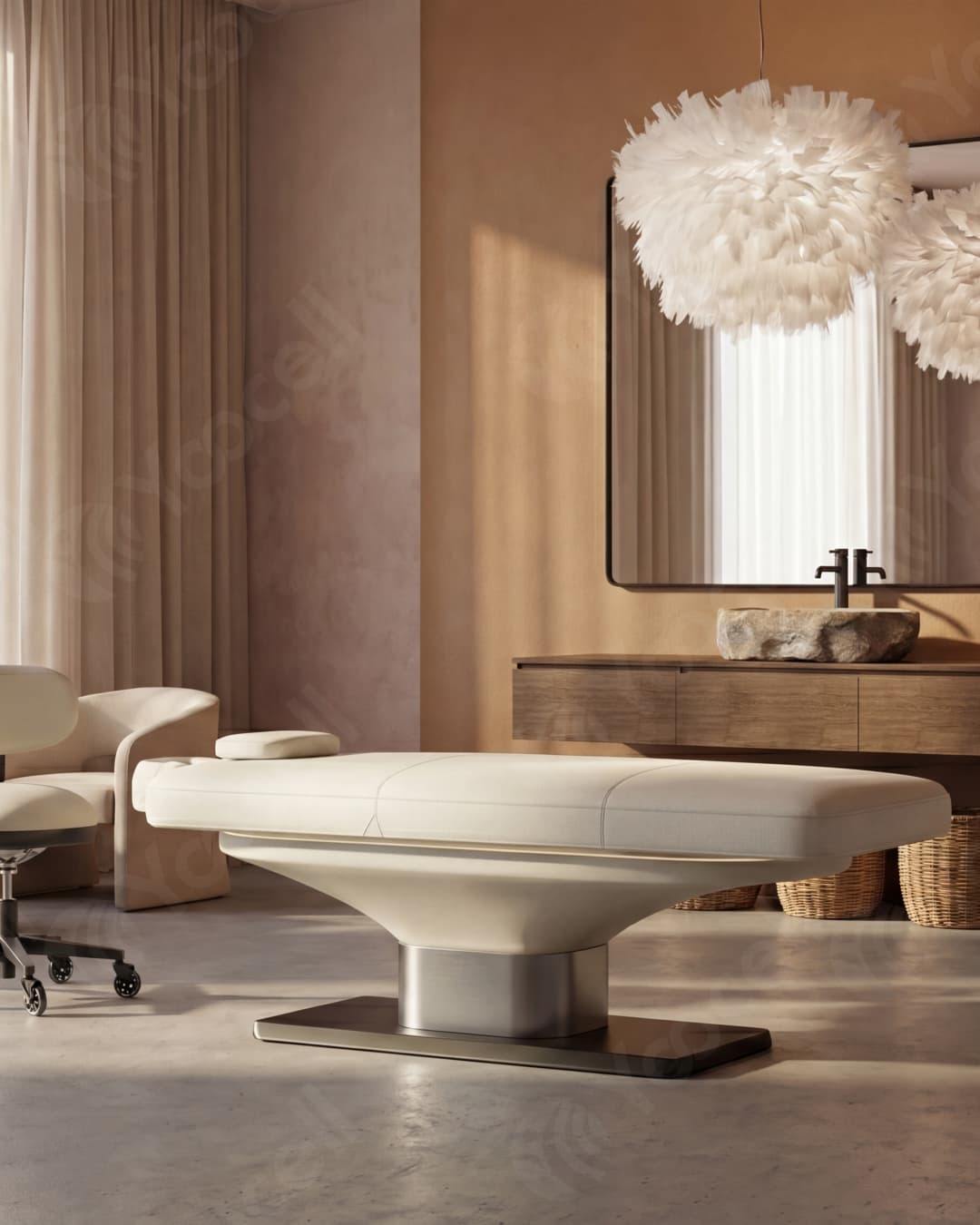
Not every treatment bed is built for the same workload. For commercial sourcing, buyers should assess the actual specifications that affect safety, comfort, and service life.
1. Weight capacity and frame stability
Many commercial models are rated between 350 and 500 lbs. Higher capacity usually indicates a stronger frame, more stable base, and better support for a wider client range. For busy salons and spas, a heavier-duty base can reduce wobble and improve treatment precision.
2. Hydraulic height adjustment range
An effective height range supports both technician ergonomics and client access. A common commercial target is roughly 24 to 34 inches, though exact dimensions vary by design. Better ergonomics can improve treatment speed and reduce operator strain during long service days.
3. Backrest and legrest adjustability
A versatile bed should support upright consultation, semi-reclined facial work, and flatter body-treatment positioning. This expands service capability without requiring multiple furniture types.
4. 360-degree swivel functionality
Some hydraulic facial beds rotate fully, which is useful in smaller treatment rooms. For operators managing room utilization closely, swivel access can improve movement efficiency and save layout space.
5. Upholstery quality
Commercial upholstery should resist stains, oil, cleanser residue, and repeated sanitation. High-density foam and durable PU or PVC upholstery can help extend product life, especially where bed turnover is high.
6. Removable headrest and face opening
These features support multi-service use, including facials, lashes, brows, massage support, and body treatments. This matters if you want one bed to support several revenue-generating services.
7. Base finish and serviceability
A powder-coated or corrosion-resistant base is often preferred in humid spa settings. Buyers should also ask whether replacement parts, hardware, and assembly guidance are available.
How much does a hydraulic facial bed cost?
Buyers often start with price, but commercial value depends on more than the lowest quote. In the current market, entry-level hydraulic beds sold through retail channels may appear around $300 to $500, while stronger commercial-grade models often land in the $600 to $1,200+ range depending on materials, lifting system, upholstery, packaging, and compliance documentation.
For B2B orders, factory-direct purchasing can reduce procurement cost by roughly 10% to 30% versus distributor-heavy channels, especially when buyers need custom colors, branding, packaging, or container quantities. IBISWorld notes that beauty businesses increasingly compare factory-direct suppliers with distributors to improve customization flexibility and control sourcing cost.
Price is typically influenced by:
- Steel frame thickness and hydraulic pump quality
- Foam density and upholstery grade
- Swivel function and adjustment complexity
- Branding, logo application, and packaging customization
- Order quantity and shipping method
- Certifications, inspection, and documentation support
For buyers sourcing multiple rooms, even a 15% unit cost reduction can create meaningful savings across a project. A 20-room rollout, for example, can quickly justify working with a manufacturer instead of buying item by item from retail websites.
Is a hydraulic facial bed better than an electric bed?
The answer depends on service mix, budget, and brand positioning.
Choose a hydraulic facial bed if you need:
- Lower upfront investment
- Reliable manual adjustment
- Fewer electrical components
- Simple operation for standard facial services
- A strong option for startups or mid-range salon concepts
Choose an electric bed if you need:
- Frequent position changes during treatment
- Higher-end medspa presentation
- More automated adjustments
- Premium service upsell positioning
In many practical salon environments, hydraulic models offer the best balance of cost and function. If your service menu is centered on facials, waxing, brows, lashes, and consultation-focused skincare, a hydraulic unit may deliver most of the needed functionality at a lower capital cost.
Statista reports that spa and salon operators increasingly assess equipment by lifetime value, service reliability, and treatment-room utilization in 2026. That makes hydraulic beds especially relevant for buyers focused on payback period rather than luxury features alone.
How to evaluate ROI before buying a hydraulic facial bed
Buyers often ask whether a bed is “worth it.” The better question is how fast it supports revenue and how long it lasts under daily use.
If a treatment room generates even $80 to $150 per facial session and the bed supports 4 to 8 services per day, the equipment can contribute to revenue quickly. Over a month, one active room may support 80 to 160 appointments. In that context, paying more for stronger build quality and better ergonomics often makes financial sense.
Evaluate ROI using these factors:
- Utilization: How many appointments per day will use the bed?
- Service range: Can one bed support facials, lashes, waxing, and consultation?
- Maintenance risk: Will simpler mechanics reduce downtime?
- Replacement cycle: Can a better-quality unit last 3 to 5 years or longer in commercial use?
- Brand image: Does the bed match your spa positioning and client expectations?
For distributors and private-label buyers, ROI also includes resale margin, warranty management, packaging protection, and repeat-order potential. This is where working with an experienced manufacturer becomes valuable.
Yoocell helps buyers compare specifications beyond the catalog photo. That includes manufacturing support, customization, bulk order handling, and quality control checkpoints that reduce sourcing uncertainty.
What should distributors, importers, and salon chains ask suppliers?
If you are buying at wholesale level, ask direct questions that protect margin and reduce post-sale issues. The best supplier is not just the one with the lowest price. It is the one that can consistently deliver quality, documentation, and support.
Important supplier questions include:
- What is the tested weight capacity?
- What frame materials and upholstery specifications are used?
- Can the hydraulic system pass repeated-use testing?
- What customization options are available for color, logo, or carton design?
- What spare parts and after-sales support are included?
- What are the lead times for sample orders and bulk production?
- How are products inspected before shipment?
- Can the supplier support mixed orders with other salon equipment or skincare OEM/ODM items?
For international buyers, trust signals matter. Documentation and process standards such as ISO 22716, GMP, and alignment with FDA cosmetic guidance are especially relevant when sourcing across both equipment and skincare categories. Even when a treatment bed itself is not regulated like a medical device, buyers still value manufacturers that operate with documented quality systems and clear production controls.
Yoocell supports global buyers with factory-direct pricing, OEM/ODM flexibility, customization, and global shipping coordination. That is especially useful for importers, distributors, and growing spa groups that want more control over specification and brand presentation.
Why factory-direct sourcing is a smart option for B2B buyers
Factory-direct sourcing gives buyers more influence over product details, order planning, and cost structure. Instead of selecting only from fixed distributor inventory, you can often adjust upholstery colors, branding, packaging, and quantity planning to fit your market.
Benefits of factory-direct sourcing include:
- Lower procurement cost potential
- Better control over specifications
- OEM/ODM branding opportunities
- Consolidated sourcing for equipment and skincare projects
- Stronger communication on production and shipping
- Scalable support for repeat wholesale orders
For example, a distributor sourcing 100 units may need custom cartons, barcode labels, manual inserts, and logo embossing. A manufacturer is usually better positioned than a retail reseller to support those needs efficiently. This can also reduce packaging damage risk and improve warehouse handling.
Yoocell is well suited for buyers that need beauty equipment manufacturing support together with skincare OEM/ODM cooperation. That combined capability can simplify sourcing for beauty brands, salon chains, and distributors expanding their private-label lines. If you want to discuss specifications, customization, or shipping plans, you can contact the Yoocell team for a sourcing consultation.
In short, the best hydraulic facial bed is not simply the cheapest one online. It is the model that matches your service mix, room design, durability target, and procurement strategy.
FAQ: Hydraulic facial bed buying questions
1. What is a hydraulic beauty bed?
A hydraulic beauty bed is a treatment bed that uses a manual hydraulic lift to adjust height. It is commonly used in salons and spas for facials, waxing, brows, lashes, and skincare services.
2. What is a facial bed used for?
A facial bed supports client comfort and technician access during facials, skin analysis, extractions, lash services, waxing, and other treatment-room procedures. Adjustable positioning helps improve workflow and service versatility.
3. What is the best facial bed for estheticians?
The best choice depends on budget and service menu. For many estheticians, a hydraulic facial bed offers strong value because it combines adjustability, stability, and lower upfront cost than electric models.
4. How much does a hydraulic facial bed cost?
Retail pricing often starts around $300 to $500 for basic models, while stronger commercial-grade options may range from $600 to $1,200 or more. Bulk factory-direct sourcing may improve pricing for B2B buyers.
5. Is a hydraulic facial bed good for small salons?
Yes. Hydraulic beds are often ideal for small salons because they save budget, support multiple services, and may include swivel functionality that helps in compact treatment rooms.
6. What should I check before placing a bulk order?
Review weight capacity, adjustment range, upholstery quality, customization options, inspection process, spare parts support, shipping terms, and lead time. These details matter more than headline price alone.