

If you are sourcing a facial bed for a spa, clinic, or private-label project, the best choice is not just about price. Buyers in 2026 want comfort, durability, cleanability, and fast after-sales support. That is why Yoocell focuses on factory-direct pricing, OEM/ODM flexibility, and global shipping for B2B customers.
Grand View Research notes that the professional beauty equipment market keeps expanding as buyers prioritize ROI and reliability. Statista also shows that spa and salon operators judge equipment by lifetime value and room utilization. In practice, that means the right bed should support more services, reduce downtime, and improve client experience.
Below is a practical guide to help you compare models, estimate costs, and choose a supplier that can scale with your business.
What a facial bed is used for
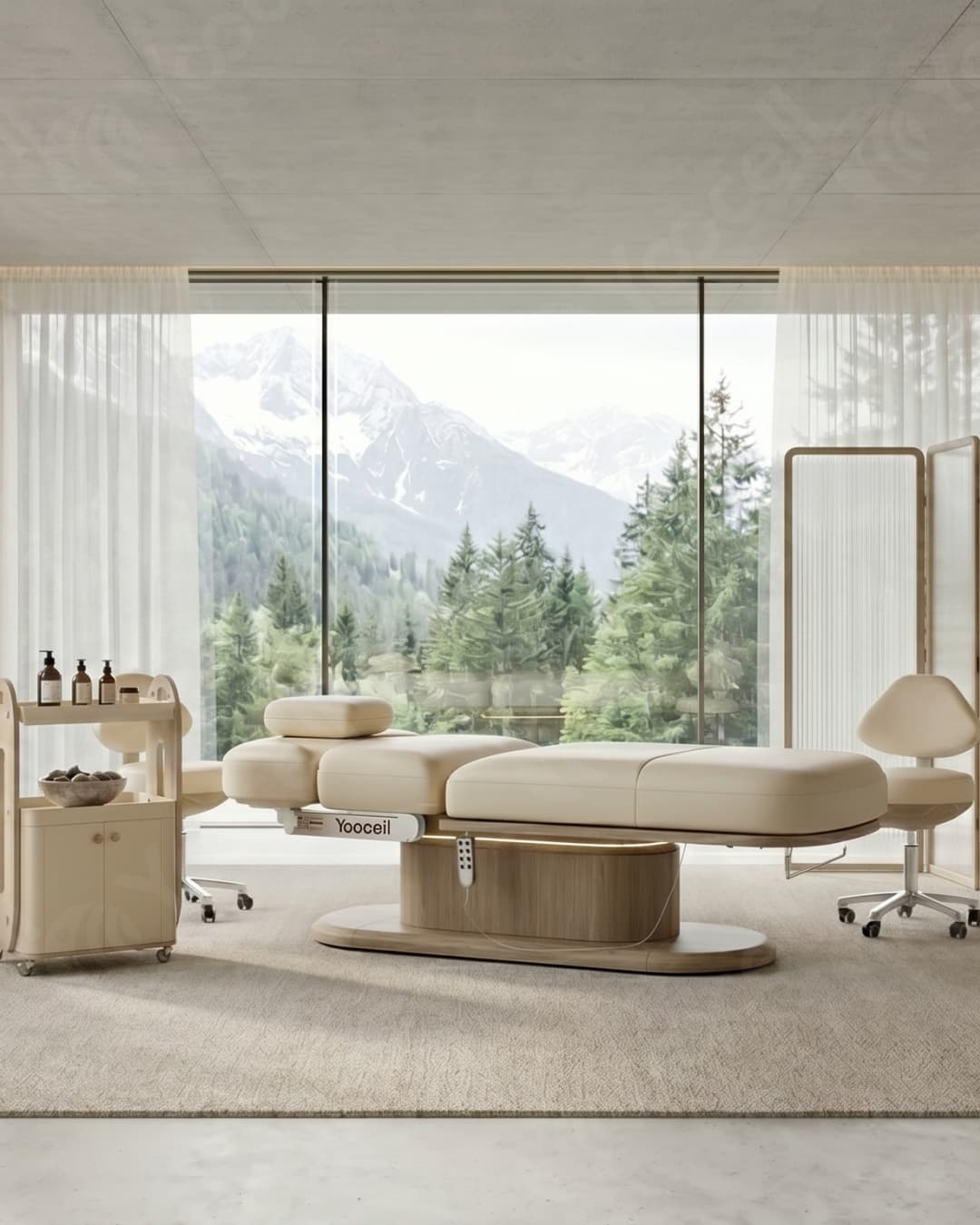
A facial bed is a treatment surface designed for skin care services, not just facials. It supports estheticians during cleansing, extractions, masks, lash work, waxing, eyebrow shaping, light massage, and some medical-aesthetic workflows.
For buyers, the main question is simple: can one bed improve both client comfort and therapist efficiency? The answer is usually yes when the frame, padding, and adjustment range are built well.
- Comfort: Thick cushioning helps clients stay relaxed during 30-90 minute sessions.
- Positioning: Adjustable backrest and leg sections support different treatments.
- Workflow: Easy height and angle changes can save 2-5 minutes per appointment.
- Hygiene: Smooth upholstery is easier to disinfect between clients.
In many spas, a better bed can improve room turnover by 10-15% because staff spend less time repositioning clients and resetting the treatment area.

Facial bed types: manual, hydraulic, electric, and portable
There are four common categories, and each serves a different buyer profile.
- Manual facial bed: Lowest purchase price, simple structure, good for low-volume rooms.
- Hydraulic facial bed: Uses a foot pump or lift system for smoother height adjustment.
- Electric facial bed: Best for premium spas, clinics, and multi-treatment suites because it improves precision and speed.
- Portable facial bed: Useful for mobile estheticians, training events, and space-limited studios.
For high-traffic operators, electric models usually deliver the strongest ROI because they reduce staff strain and support more service types. In larger service menus, one bed may need to handle facials, LED therapy, waxing, and scalp treatments. A single upgrade can therefore replace 2 or 3 separate pieces of furniture.
If you are comparing product lines, Yoocell can help with OEM/ODM customization such as frame color, upholstery, logo placement, and control layout.
How to choose the right facial bed for your business
Start with your daily volume, treatment mix, and room size. A spa that books 6 clients per day has different needs from a clinic that books 20+ sessions and needs faster room resets.
Use these buyer checks:
- Weight capacity: Look for stable support and reinforced structure.
- Padding density: High-density foam keeps its shape longer and improves comfort.
- Upholstery: Choose easy-clean material that resists cracking and chemical wear.
- Adjustability: Backrest, leg rest, and height range should match your service list.
- Noise level: Quiet motors are better for premium spa experiences.
- Maintenance: Ask how often motors, switches, and upholstery should be inspected.
A practical rule is to match the bed to your highest-value service. If you perform advanced skincare, microcurrent, or head spa work, an electric model often pays back faster than a basic manual frame.
Many buyers also compare replacement cycles. A well-made bed can remain in service for 3-5 years or longer when the frame, upholstery, and actuator system are maintained properly.
Factory-direct buying vs distributor pricing
This is where many B2B buyers save the most money. IBISWorld points to the value of reducing intermediary layers, and that logic is easy to see in beauty equipment sourcing.
With factory-direct purchasing, you often gain:
- 10-25% lower landed cost versus multi-layer distribution, depending on order size and destination.
- Better customization control for fabric, color, dimensions, and branding.
- Cleaner communication with the team that actually builds the product.
- More predictable lead times for bulk orders and repeat purchasing.
That is why Yoocell supports bulk orders, OEM/ODM development, and global shipping for salon groups, distributors, and brand owners. If you are comparing supplier structures, you can contact Yoocell for a factory quote and review options before you commit.
For buyers managing multiple locations, direct sourcing also makes it easier to standardize the same facial bed model across all rooms. That can lower training time and simplify maintenance.
Quality, compliance, and customization checks
Beauty buyers should treat quality as a procurement requirement, not a bonus. For skincare OEM/ODM and equipment sourcing, documentation matters.
Look for these trust signals:
- ISO 22716: A recognized GMP-style guideline for cosmetic manufacturing hygiene and control.
- GMP: Good manufacturing practice helps support consistent output and traceability.
- FDA guidance: Useful for understanding cosmetic and skin-contact safety expectations in the U.S. market.
- Inspection records: Ask for material, assembly, and final QC steps.
Customization is equally important. A strong supplier should offer options such as:
- Motor count and control type
- Upholstery texture and color
- Logo branding and packaging
- Accessory integration for trays, arm supports, or foot controls
Yoocell emphasizes quality control at each stage, from sourcing to final inspection, so buyers can reduce defect risk and improve consistency across shipments.
Why Yoocell is a strong OEM/ODM partner
Yoocell is built for B2B buyers who need more than a catalog listing. The company supports beauty salon equipment manufacturing and skincare OEM/ODM supply with factory-direct pricing, customization, and export-ready service.
Why this matters:
- Factory-direct pricing: Helps protect margin for resellers and spa chains.
- OEM/ODM support: Useful when you want to launch a branded product line.
- Global shipping: Important for distributors serving more than one market.
- Manufacturing support: Helps with specs, samples, and mass production planning.
- Quality control: Reduces risk when you scale from pilot order to repeat orders.
For many buyers, the best supplier is not the cheapest quote. It is the partner that can keep quality stable, protect delivery schedules, and support growth across 12-24 months of expansion. That is the core value Yoocell aims to provide.
As the market keeps evolving in 2026, the winning facial bed is the one that balances comfort, durability, service efficiency, and sourcing flexibility.
FAQ: facial bed buying questions
What is a facial bed used for?
A facial bed is used for facials, waxing, lash services, skin analysis, head spa treatments, and other esthetic services that need stable client positioning.
What are the different types of facial beds?
The main types are manual, hydraulic, electric, and portable. Electric models offer the most convenience for busy salons and clinics.
How much do facial beds cost?
Pricing depends on features, materials, and order volume. Factory-direct buyers often reduce cost by 10-25% compared with layered distribution.
What is the best facial bed for an esthetician?
The best choice is usually an electric or hydraulic bed with strong padding, easy cleaning, and adjustable sections that match your services.
Should I buy from a factory or distributor?
If you need customization, bulk pricing, or private label branding, buying from a factory like Yoocell is usually the better long-term option.
What compliance documents should I request?
Ask for ISO 22716, GMP-related documentation, material details, and any FDA-relevant guidance for your market. These help verify supplier quality.