

An electric beauty couch is no longer a luxury item for modern salons, spas, medspas, and esthetic clinics. It is a productivity tool that affects treatment comfort, therapist ergonomics, room turnover, and long-term return on investment. Buyers in 2026 are looking beyond appearance alone. They want durable motors, stable lifting systems, easy-clean upholstery, compliance-friendly documentation, and dependable after-sales support.
For B2B buyers, the decision also comes down to sourcing strategy. Buying factory-direct can reduce procurement costs by 10% to 30% compared with some distributor channels, while also improving customization options for upholstery, frame color, branding, and packaging. That is why many importers, salon chains, wholesalers, and private-label beauty brands work with manufacturers like Yoocell, which supports beauty equipment production, OEM/ODM projects, global shipping, and quality control.
This guide explains what to look for, how to compare models, what price ranges are realistic, and how to choose a supplier that supports your business growth.
What is an electric beauty couch and why do salons choose it?
An electric beauty couch is a motorized treatment bed designed for facials, skin treatments, lashes, PMU, massage, and selected aesthetic procedures. Unlike manual or hydraulic beds, electric models allow smooth adjustment of height, backrest, leg section, and sometimes tilt functions through built-in motors.
That matters because treatment flexibility directly affects room utilization. According to industry trends cited by Statista in 2026, spa and salon operators increasingly evaluate equipment based on lifetime value, service reliability, and treatment-room utilization. A multi-function couch can help one room support several treatment categories instead of just one.
For example, a 3-motor or 4-motor couch may let a clinic perform facials in the morning, lash services in the afternoon, and body or consultation treatments later in the day. If a single room handles even 15% to 25% more usable appointments each week, the equipment can pay back faster than a static bed.
- Better client comfort during long treatments
- Less strain for estheticians and therapists
- Faster setup between service types
- Higher perceived service value
- More versatile treatment-room use
Key electric beauty couch features buyers should compare
Not all couches are built for the same commercial use. A low-cost online model may look similar in photos but differ significantly in frame thickness, motor quality, foam density, load capacity, and warranty support. B2B buyers should compare specifications in a structured way.
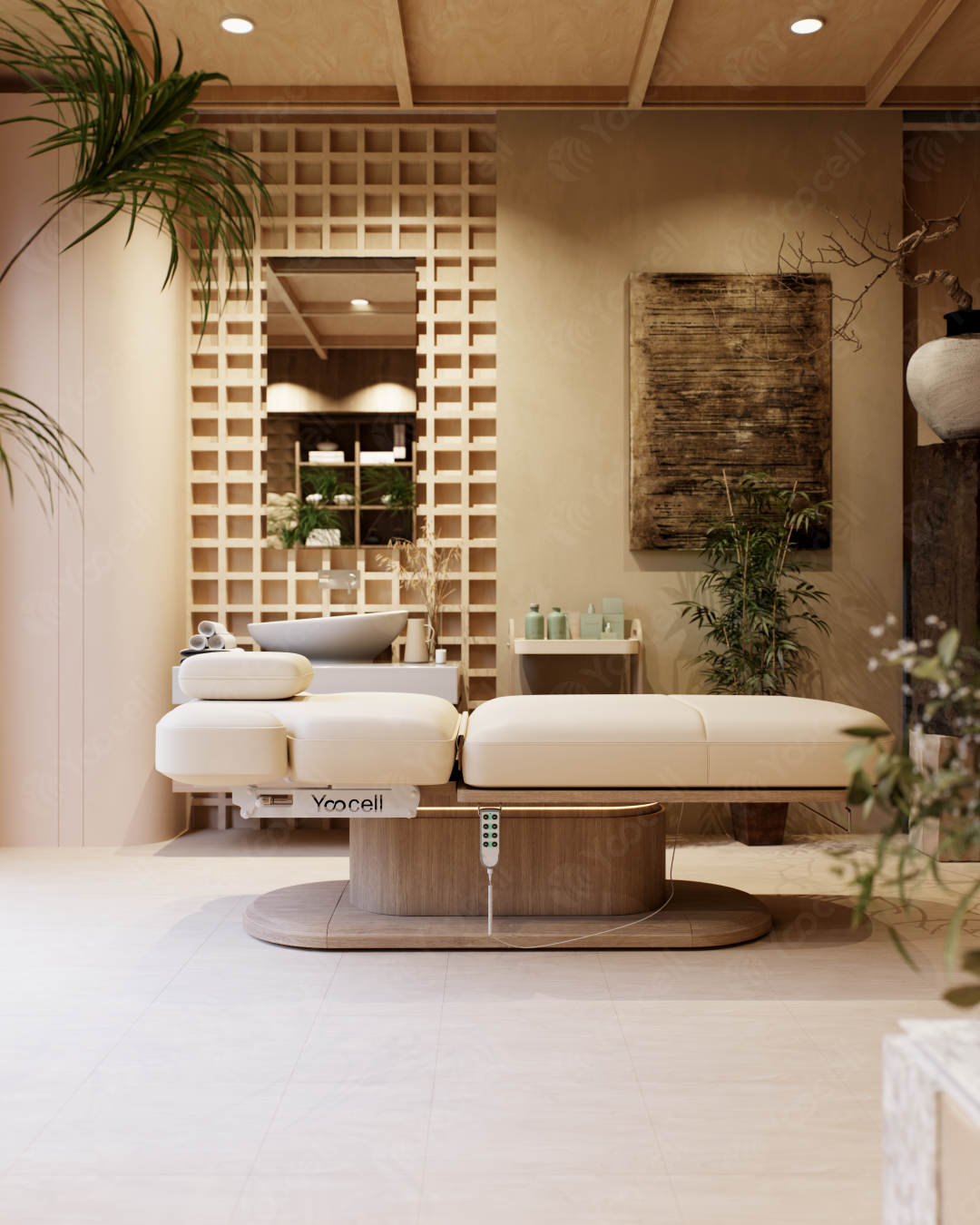
Here are the most important criteria:
- Motor configuration: Common options include 2-motor, 3-motor, and 4-motor systems. More motors usually mean more precise positioning and broader treatment compatibility.
- Weight capacity: Commercial-grade units often support 150 kg to 250 kg or more. Higher capacity usually indicates stronger frame engineering.
- Height range: A wide adjustment range improves ergonomics for therapists of different heights and reduces back strain.
- Upholstery: PU leather or medical-grade upholstery should resist oils, stains, and frequent disinfecting.
- Foam density: Higher-density foam improves comfort retention over 3 to 5 years of repeated use.
- Base stability: A reinforced steel structure reduces wobble during treatment.
- Control options: Hand remote, foot pedal, or memory settings can improve workflow.
- Removable accessories: Headrests, armrests, face holes, and paper roll holders increase flexibility.
Ask suppliers for detailed spec sheets, packaging dimensions, loading quantity, and testing information. A serious manufacturer should be able to explain materials, production controls, and maintenance recommendations clearly.
How to evaluate electric beauty couch price vs ROI
Price matters, but purchase cost alone does not tell the full story. In the current market, a commercial electric beauty couch can range from roughly $600 to $5,000+ depending on motor count, materials, branding, and market positioning. Premium retail brands may price much higher because of showroom overhead, reseller margin, and regional warehousing costs.
According to IBISWorld 2026 sourcing patterns, beauty businesses increasingly compare factory-direct suppliers against distributors to lower procurement cost and gain more customization flexibility. For B2B importers or chain operators buying multiple units, factory-direct sourcing can significantly improve landed-cost efficiency.
When estimating ROI, look at these numbers:
- If factory-direct sourcing saves 15% on a 20-unit order, total procurement savings can become meaningful immediately.
- If an upgraded couch supports one extra treatment per day at a margin of $40 to $80, annual revenue impact can exceed the original equipment premium.
- If better ergonomics reduce staff fatigue and improve service consistency, that can support retention and online review quality over time.
- If one couch serves 3 to 5 treatment categories instead of only one, room utilization increases without expanding floor space.
Buyers should compare total cost of ownership, including shipping, import duty, spare parts, warranty handling, packaging durability, and service response time. A lower unit price is not always a better deal if support is weak.
Yoocell works with B2B buyers that want factory-direct pricing, bulk order support, and practical customization rather than inflated retail markups. That makes it easier to build a product mix aligned with your target market and margin goals.
What specifications matter most for salons, spas, and clinics?
The right specification depends on your treatment menu and client profile. Here is a practical breakdown for common buyer types.
For facial salons and esthetic studios
- 3-motor adjustment is often a strong balance of price and functionality
- Easy-clean upholstery is essential for frequent turnover
- Small footprint models help maximize room layout
For medspas and skin clinics
- Higher stability is important for precision procedures
- Flat positioning and flexible backrest angles support more treatment types
- Documentation and compliance-friendly materials matter more
For spa chains and franchise groups
- Consistent quality across batches is critical
- Bulk production lead time and replacement parts planning matter
- Branding customization helps standardize the customer experience
For wholesalers and importers
- Container loading efficiency can affect freight cost per unit
- Neutral packaging or private-label packaging may be required
- Repeatable manufacturing quality supports long-term resale reputation
In 2026, Grand View Research continues to highlight that the professional beauty equipment market is growing as buyers prioritize durability, ROI, and after-sales support. That means the most competitive products are not just stylish; they are operationally dependable.
OEM/ODM sourcing: why manufacturers can offer better flexibility
For many buyers, the biggest question is whether to source from a brand reseller or directly from a manufacturer. If you need private labeling, bulk orders, recurring inventory, or integrated skincare and equipment sourcing, direct manufacturing support can be a major advantage.
Yoocell is both a beauty salon equipment manufacturer and a skincare OEM/ODM supplier, which is useful for distributors and beauty brands building coordinated treatment solutions. Instead of sourcing equipment from one vendor and treatment products from another, some buyers prefer a more consolidated supply chain.
Typical OEM/ODM options can include:
- Custom upholstery colors
- Logo branding on beds or packaging
- Different motor configurations
- Accessory selection changes
- Private-label manuals and carton design
- Bulk order planning and repeat production
For importers, this can shorten decision cycles and improve product-market fit. It can also reduce risk when entering a new market segment, because the product can be adjusted to your audience instead of forcing a one-size-fits-all retail model.
If you are comparing suppliers, ask whether they support sampling, QC reporting, OEM documentation, and global shipping coordination. You can also contact the Yoocell team for project-based sourcing support.
Quality control, compliance, and documentation buyers should request
Commercial buyers should not treat beauty furniture as a simple commodity. Product documentation and process control are key trust signals, especially for importers, clinics, and distributors. While regulations vary by market and product category, professional sourcing teams often look for systems aligned with ISO 22716, GMP, and relevant FDA cosmetic guidance when evaluating a broader beauty supply partner.
For the couch itself, request documentation such as:
- Material specifications
- Load test information
- Motor details and lifespan estimates
- Carton drop-test or packaging protection details
- Cleaning and maintenance instructions
- Warranty terms and spare-parts policy
Strong quality control can reduce freight damage, installation issues, and early failure rates. Even a 5% reduction in defect-related claims can noticeably improve distributor profitability at scale.
Yoocell emphasizes manufacturing support, quality control, and after-sales coordination for global buyers. That is especially important when ordering in volume, where consistency from batch to batch matters more than a single showroom sample.
How to choose the best electric beauty couch supplier
The best supplier is not always the cheapest or the most visible online. For B2B purchasing, supplier quality is measured by communication, repeatability, documentation, flexibility, and post-sale support.
Use this supplier checklist before placing an order:
- Ask for clear specifications. Avoid vague listings without motor, material, or load data.
- Review manufacturing capability. Confirm whether the supplier is a factory, trader, or mixed model.
- Check customization options. This matters for chains, resellers, and private-label buyers.
- Confirm lead times. Typical production may range from 20 to 45 days depending on quantity and customization.
- Discuss after-sales support. Spare parts and troubleshooting response should be defined in advance.
- Evaluate shipping readiness. Export packaging quality affects landed condition and claim rates.
- Compare long-term value. A stable supplier relationship is often worth more than a one-time low quote.
For salons buying a single unit, appearance and price may dominate the decision. For wholesalers, brand owners, and growing clinic groups, sourcing discipline matters more. Factory-direct partners like Yoocell can help buyers balance cost, customization, quality control, and global logistics in one process.
In short, the best electric beauty couch is the one that matches your service menu, supports your team ergonomically, protects your margin, and comes from a supplier that can grow with your business.
FAQs about electric beauty couch buying
1. What is the ideal motor configuration for an electric beauty couch?
For most salons and esthetic clinics, a 3-motor model offers the best balance of flexibility and cost. It usually covers height, backrest, and leg adjustment, which is enough for multiple treatment types.
2. How much does an electric beauty couch usually cost?
Commercial models commonly range from about $600 to $5,000 or more, depending on features, brand positioning, upholstery, and sourcing channel. Factory-direct orders may reduce procurement cost compared with retail or distributor pricing.
3. Is factory-direct sourcing better for bulk buyers?
Yes. For distributors, chain salons, and importers, factory-direct sourcing often improves pricing, customization, and repeat-order consistency. It can also simplify OEM/ODM branding and packaging requirements.
4. What weight capacity should I look for?
A commercial-grade couch should typically support at least 150 kg, with many stronger models reaching 200 kg to 250 kg. Higher capacity generally indicates better frame stability and broader client suitability.
5. What documents should I request from a supplier?
Ask for specifications, motor details, material information, warranty terms, packaging data, and QC or testing records. If you also source skincare products, trust signals like ISO 22716, GMP, and FDA-related guidance become even more relevant.
6. Can Yoocell customize an electric beauty couch for my brand?
Yes. Yoocell supports B2B customization, OEM/ODM cooperation, bulk orders, global shipping, and manufacturing support. That can include branding, color options, packaging adjustments, and product configuration discussions based on your market needs.