
A beauty treatment bed is one of the most important investments in any salon, spa, lash studio, facial clinic, or wellness business. The right bed affects client comfort, therapist efficiency, treatment capacity, brand image, and long-term operating cost. For B2B buyers, it is not just furniture. It is revenue-generating equipment.
In 2026, professional buyers are looking beyond appearance alone. According to Grand View Research and Statista, salon and spa operators increasingly compare equipment by durability, ROI, service support, and room utilization. That means buyers want a treatment bed that performs well for years, reduces maintenance issues, fits multiple service types, and supports a premium customer experience.
For importers, distributors, chain salons, and private-label brands, sourcing directly from a manufacturer can also improve margins. Yoocell, as a beauty salon equipment manufacturer and skincare OEM/ODM supplier, supports factory-direct pricing, customization, global shipping, and quality-focused manufacturing support for growing beauty businesses.
Why the right beauty treatment bed matters for business performance
A treatment bed influences more than comfort. It can affect how many services you offer, how quickly staff can reset rooms, and how professional your space looks to clients.
- Higher service flexibility: One adjustable bed can support facials, lash treatments, PMU, brow services, skincare consultations, and light aesthetic procedures.
- Better room utilization: Multi-use equipment can improve treatment-room use by 15% to 30% when compared with single-purpose setups.
- Improved client retention: Comfortable, stable beds can help reduce treatment interruptions and improve repeat-booking rates.
- Labor efficiency: Electric adjustment can reduce therapist repositioning time by 10% to 20% per session.
- Long-term savings: Factory-direct sourcing may reduce procurement cost by 15% to 35% versus some distributor channels, based on common B2B purchasing comparisons noted by IBISWorld in 2026.
For premium businesses, the bed also becomes part of brand perception. A dated or unstable bed can undermine trust, especially in higher-ticket facial and skin-rejuvenation services.
What buyers should look for in a beauty treatment bed
Not every bed fits every business model. The best choice depends on service menu, target customer, operator workflow, and procurement budget.
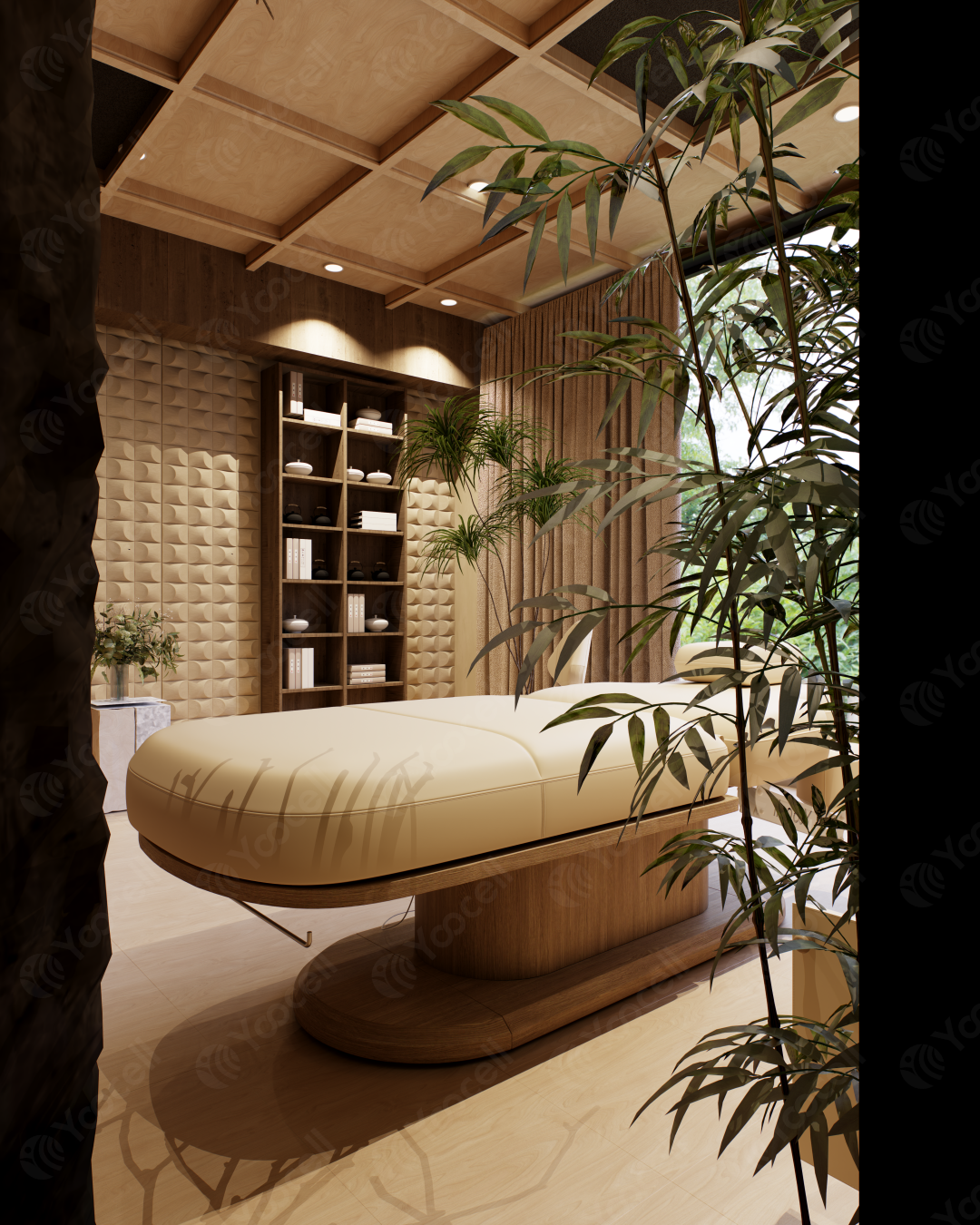
Here are the main buying criteria:
1. Adjustment system
Choose between manual, hydraulic, or electric models.
- Manual: Lower upfront cost, suitable for budget-conscious buyers or low-frequency use.
- Hydraulic: Good balance of price and function.
- Electric: Best for premium salons, medical-aesthetic environments, and multi-service treatment rooms.
2. Weight capacity and frame stability
Commercial-use beds should typically support 150 kg to 250 kg or more, depending on target clientele and treatment type. A reinforced steel or hardwood-supported frame is usually preferred for daily professional use.
3. Upholstery and foam density
Look for easy-clean, chemical-resistant upholstery. High-density foam improves comfort during 60 to 120-minute sessions. Lower-density padding may compress faster, increasing replacement cost.
4. Ergonomics for therapists
Improper bed height can contribute to back and shoulder strain. Adjustable height and backrest settings help technicians work more efficiently and safely.
5. Service compatibility
Buyers should confirm whether the bed supports:
- Facials
- Lash extensions
- Brow services
- Waxing
- PMU
- Skincare consultations
- Light body treatments
6. Maintenance and spare parts
After-sales support matters. A lower-cost bed can become expensive if replacement motors, upholstery parts, or hinges are difficult to source.
Which type of treatment bed is best for salons, spas, and estheticians?
This depends on your service mix and pricing model.
For facial salons: An electric or hydraulic beauty bed with adjustable backrest and leg support is usually the most versatile choice.
For lash and brow studios: Comfort and head positioning matter most. Curved or ergonomically padded models may improve client comfort during sessions lasting 90 to 180 minutes.
For medspa-style rooms: Electric beds with multiple motors, smooth lift systems, and easy sanitation surfaces are often preferred.
For startup salons: A durable manual or hydraulic bed can control capital expense while still supporting core services.
For chain operators and distributors: Standardized models with OEM customization offer better brand consistency and easier procurement planning across multiple locations.
A useful rule is this: if your average treatment value is above $60 and sessions regularly last more than 45 minutes, upgrading to a higher-spec adjustable bed often makes financial sense. Even a 5% increase in repeat bookings can have a meaningful annual revenue impact.
How to calculate ROI before buying a treatment bed
B2B buyers should evaluate a treatment bed as an income-producing asset, not just a furnishing item.
Use this simple framework:
- Purchase cost: Product, freight, duty, installation, and accessories
- Expected lifespan: Often 3 to 7 years for commercial use, depending on quality and maintenance
- Revenue contribution: Number of treatments per day × average treatment value
- Efficiency gain: Time saved through faster adjustments and easier cleaning
- Brand impact: Premium appearance can support higher pricing
Example:
- Bed cost: $1,800
- Useful life: 5 years
- Treatments per day: 6
- Average treatment value: $75
- Monthly service days: 24
That room may generate $10,800 per month in treatment revenue. If a better bed helps improve utilization by just 8%, that is an added $864 per month. In that scenario, the equipment can pay for itself in roughly 2 to 3 months, excluding other operating variables.
This is why Statista and Grand View Research both point to lifetime value and service reliability as major purchase considerations in 2026.
Factory-direct vs distributor sourcing: what is better for B2B buyers?
Many buyers compare local distributors with factory-direct manufacturers. Each model has benefits, but factory-direct sourcing is often more attractive for growing businesses, wholesalers, and multi-location operators.
Distributor model advantages:
- Local inventory may shorten lead time
- Simple ordering for single-unit purchases
- May offer regional support
Factory-direct advantages:
- Better pricing control
- OEM/ODM customization options
- Bulk order support
- Broader product configuration choices
- Closer communication on materials and specifications
IBISWorld notes that beauty businesses increasingly compare direct manufacturing partners against reseller channels to improve procurement efficiency and customization flexibility. In practice, factory-direct buying may reduce sourcing cost by 15% to 35%, especially for larger orders or bundled salon projects.
Yoocell supports this model with factory-direct pricing, OEM/ODM flexibility, quality control, and global shipping support. For buyers building a private brand or furnishing multiple treatment rooms, this approach can improve consistency and margin at the same time.
What compliance and quality signals should buyers verify?
Professional buyers should always ask for documentation and manufacturing standards, especially if the bed will be used in regulated skincare or aesthetic environments.
Important trust signals include:
- ISO 22716: Especially relevant when sourcing from suppliers involved in skincare OEM/ODM and cosmetic manufacturing processes
- GMP practices: A strong indicator of controlled production and quality systems
- FDA cosmetic guidance awareness: Important for suppliers serving beauty and skincare categories in the U.S. market
- Material documentation: Upholstery specs, fire resistance information, cleaning compatibility, and frame material data
- Quality inspection process: Pre-shipment inspection, load testing, finish inspection, and packaging standards
Ask suppliers these direct questions:
- What is the frame material and tested load capacity?
- What warranty applies to motors, upholstery, and structure?
- Can replacement parts be supplied within 12 to 24 months?
- What cleaning chemicals are safe for the surface?
- Do you support custom colors, branding, or packaging?
Yoocell is positioned well for B2B buyers because it combines beauty equipment manufacturing with skincare OEM/ODM support, which helps buyers simplify sourcing across treatment-room equipment and branded product development.
How Yoocell supports salon, spa, and private-label buyers
When sourcing a beauty treatment bed, B2B buyers often need more than a product catalog. They need a partner who understands manufacturing details, shipping requirements, customization, and after-sales support.
Yoocell provides:
- Factory-direct pricing to help reduce procurement cost
- OEM/ODM support for branded salon furniture and skincare programs
- Customization options for colors, materials, and project requirements
- Global shipping for international buyers and distributors
- Quality control through manufacturing oversight and product checks
- B2B support for bulk orders, project sourcing, and long-term cooperation
This is especially useful for salon chains, importers, medspa startups, and distributors that want coordinated procurement rather than fragmented purchasing from multiple vendors.
If you are planning a new beauty project, upgrading treatment rooms, or exploring OEM/ODM cooperation, you can contact the Yoocell team for product and sourcing support.
Buyer checklist before placing an order
Use this checklist to reduce sourcing mistakes:
- Confirm treatment types the bed must support
- Measure room dimensions and access points
- Set target budget and required ROI timeline
- Choose manual, hydraulic, or electric adjustment
- Verify weight capacity and frame material
- Review upholstery durability and cleanability
- Check warranty and spare-part availability
- Ask about lead time and shipping method
- Confirm OEM/ODM customization if needed
- Request quality documents and inspection details
The best buying decision balances comfort, function, durability, service support, and total cost of ownership. A low upfront price is not always the lowest long-term cost.
For many professional buyers in 2026, the winning strategy is clear: source equipment that improves treatment efficiency, protects brand image, and supports business growth. That is exactly why factory-capable partners such as Yoocell continue to attract salons, spas, and beauty brands worldwide.
FAQ: beauty treatment bed buying questions
1. What is the best beauty treatment bed for a facial salon?
The best option is usually an adjustable hydraulic or electric bed with strong padding, easy-clean upholstery, and a stable frame. It should support multiple facial and skincare services without slowing down room turnover.
2. Is an electric treatment bed worth the higher price?
Yes, for many professional businesses. Electric models can improve therapist ergonomics, reduce setup time by 10% to 20%, and create a more premium client experience, which may support better retention and pricing.
3. How long should a commercial beauty treatment bed last?
A quality commercial bed often lasts 3 to 7 years or longer, depending on materials, daily usage, maintenance, and service quality. Higher-grade frames and upholstery usually lower replacement frequency.
4. Why do B2B buyers choose factory-direct suppliers?
Factory-direct suppliers often offer better pricing, more customization, bulk-order support, and closer communication on specifications. This can reduce procurement cost by 15% to 35% compared with some reseller channels.
5. What certifications or standards should I ask about?
Ask about quality systems, material documentation, GMP awareness, ISO 22716 relevance for skincare-related sourcing, and familiarity with FDA cosmetic guidance. Also request warranty, testing, and inspection details.
6. Can Yoocell customize beauty treatment beds for my brand?
Yes. Yoocell supports OEM/ODM projects, customization, bulk orders, global shipping, and manufacturing support. This is useful for salon chains, distributors, and private-label beauty businesses seeking consistent branding.