

A beauty couch is one of the most important equipment investments in any salon, spa, aesthetic studio, or skincare clinic. The right model improves client comfort, supports more treatments, reduces staff fatigue, and helps operators protect long-term ROI. For B2B buyers, the decision is not just about appearance. It is about durability, weight capacity, adjustability, compliance, maintenance, and supplier support.
In 2026, buyers are comparing equipment more carefully than ever. Grand View Research notes that the professional beauty equipment market continues to grow as salons and clinics prioritize durability, return on investment, and after-sales service. Statista also highlights that operators increasingly measure treatment-room utilization and lifetime value before purchasing major equipment. That means choosing a beauty couch should be a strategic procurement decision, not an impulse buy.
This guide explains what a beauty couch is used for, how to choose the right specification, what price factors matter, and why factory-direct sourcing can improve margins. If you are sourcing for chain salons, distributors, private label projects, or new spa openings, this article will help you buy smarter.
What Is a Beauty Couch Used For?
A beauty couch is a professional treatment bed designed for beauty, spa, and aesthetic services. It gives clients a stable, comfortable surface while allowing technicians to work efficiently.
Typical applications include:
- Facials and advanced skincare treatments
- Waxing and threading
- Eyelash and brow services
- Semi-permanent makeup procedures
- Laser and aesthetic treatments
- Massage and wellness services
- Body treatments and consultations
Many businesses want one couch to support multiple services. That is why adjustability matters. A basic fixed bed may work for a single-service room, but a multi-function electric model can improve room utilization by 20% to 35% when one treatment space must support facials, body care, and device-based services.
For growing businesses, a beauty couch also influences client perception. Comfortable padding, smooth motor movement, premium upholstery, and clean design can support stronger rebooking rates and a more professional brand image.
How to Choose the Right Beauty Couch for Your Business
Choosing the right beauty couch starts with your treatment menu and business model. A solo esthetician has different needs than a multi-room chain spa or OEM distributor.
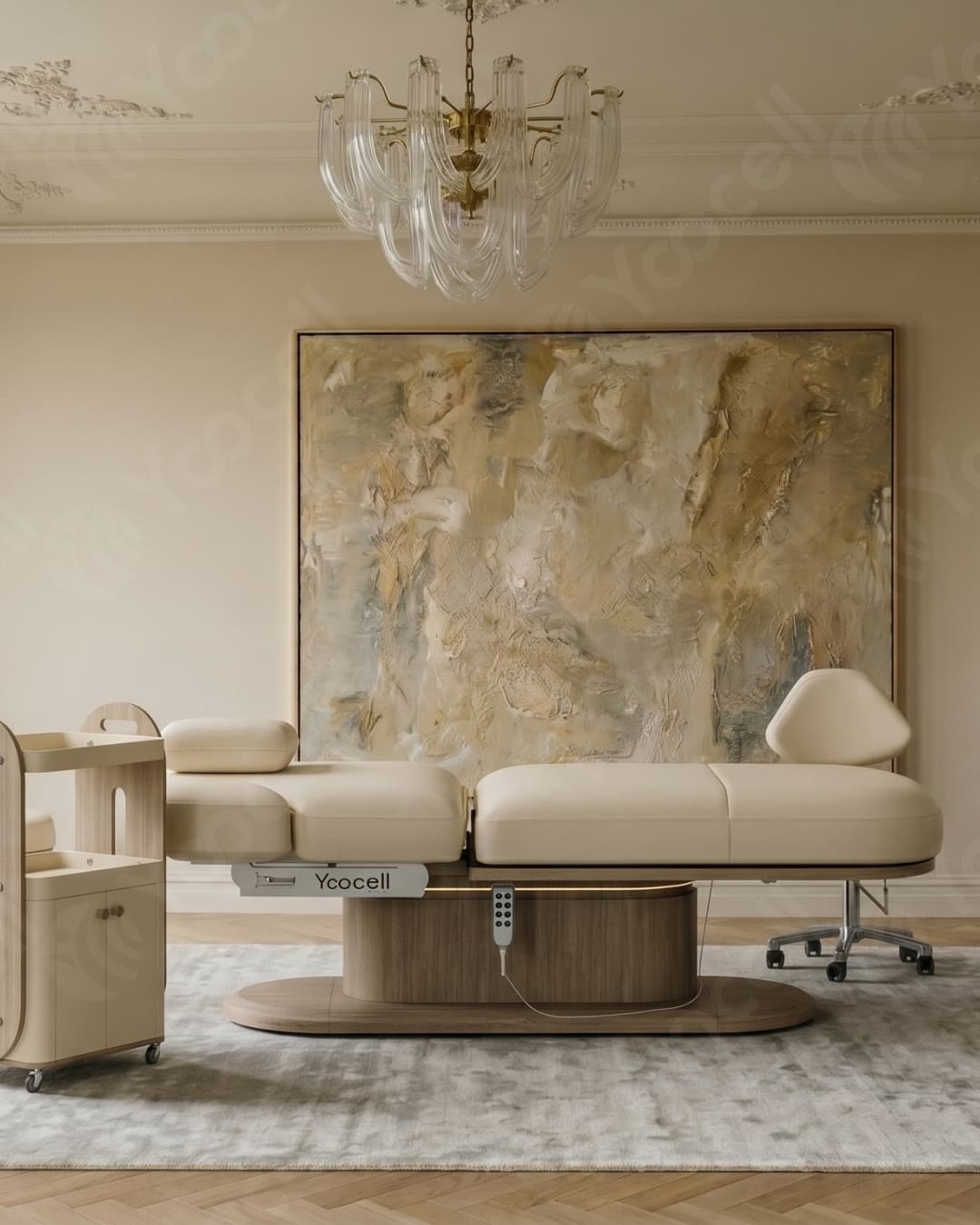
Ask these questions before placing an order:
- What treatments will be performed? Facials, waxing, massage, lashes, and laser require different positioning needs.
- How many hours per day will the couch be used? Heavy-use rooms need stronger frames, better motors, and easier-clean materials.
- Do you need electric or manual adjustment? Electric models improve ergonomics and workflow but cost more upfront.
- What room size do you have? Standard couch lengths are often around 180 to 190 cm, with widths from 60 to 80 cm.
- What client weight range must be supported? Many commercial buyers now require safe working loads of 150 kg to 200 kg or more.
- What branding or customization is needed? OEM/ODM projects may require custom colors, logos, packaging, or feature sets.
A good B2B purchasing checklist should include frame material, motor count, foam density, upholstery grade, warranty terms, spare parts availability, and shipping lead time. Buyers who compare these factors usually avoid costly replacement cycles later.
Yoocell supports this type of structured sourcing approach by offering factory-direct pricing, customization, bulk order support, and manufacturing guidance for distributors and salon groups. That is especially useful when buyers need tailored specifications instead of standard retail models.
Beauty Couch Features That Matter Most
Not all couches are built for professional use. The best models combine comfort, treatment flexibility, and long service life.
Here are the key features to prioritize:
- Electric adjustment: Common 2-motor, 3-motor, or 4-motor systems allow height, backrest, leg rest, and tilt adjustments.
- Height range: A wider range can reduce therapist strain. Many commercial models operate between roughly 60 cm and 85 cm.
- Weight capacity: Real working load is more important than marketing claims. For B2B settings, 180 kg to 200 kg is often a safer benchmark.
- Foam and upholstery: High-density foam and medical-grade or easy-clean PU improve comfort and maintenance.
- Face hole and removable armrests: Useful for massage and multi-treatment flexibility.
- Stable frame construction: Steel frames usually support better durability than lightweight consumer designs.
- Easy sanitation: Smooth surfaces and chemical-resistant coverings help daily cleaning.
Client comfort is not a small detail. Operators often report that more comfortable beds contribute to better treatment experience and stronger repeat bookings. Even a 5% increase in retention can meaningfully improve revenue over 12 months.
Staff ergonomics matter too. If technicians perform 6 to 12 treatments per day, poor height adjustment can lead to fatigue and slower workflows. Electric positioning can save several minutes per appointment. Across 8 appointments daily, even a 5-minute efficiency gain can free up 40 minutes of treatment capacity.
What Should a B2B Buyer Check Before Ordering?
B2B buyers should go beyond product photos and basic dimensions. A reliable supplier should provide technical documentation, quality standards information, and realistic production timelines.
Check the following before confirming a beauty couch order:
- Frame and motor specifications
Request details on steel gauge, motor brand, voltage, and duty cycle. - Testing and quality control
Ask about load testing, stability checks, upholstery inspection, and final assembly inspection. - Compliance and documentation
For broader beauty sourcing, buyers often look for trust signals such as ISO 22716, GMP, and awareness of FDA cosmetic guidance where relevant. While those standards are especially important in skincare OEM/ODM, documentation culture often reflects supplier maturity. - Packaging and shipping protection
Proper carton design, corner protection, and pallet options reduce transit damage in global shipping. - Parts and after-sales support
Motors, handsets, screws, and upholstery components should be replaceable. - Lead time and MOQ
Production can vary from 15 to 45 days depending on customization level and order volume.
IBISWorld reports that beauty businesses increasingly compare factory-direct suppliers with distributors to reduce procurement cost and improve customization flexibility. In practical terms, factory-direct sourcing can lower procurement cost by 10% to 30% compared with some distributor channels, especially on bulk projects.
Yoocell works with B2B buyers who need more than a catalog item. As a beauty salon equipment manufacturer and skincare OEM/ODM supplier, Yoocell supports product customization, global shipping, and quality-focused manufacturing support for salons, wholesalers, and private label buyers.
Beauty Couch Price, ROI, and Cost of Ownership
Many buyers focus only on purchase price, but total cost of ownership is more important. A lower-priced couch may become more expensive if it fails early, needs replacement parts quickly, or causes workflow inefficiency.
When calculating ROI, include:
- Initial unit cost
- Freight and import cost
- Installation or setup time
- Expected service life
- Maintenance and spare parts
- Impact on treatment speed
- Client satisfaction and premium positioning
Example: if a couch costs $800 more than a basic model but improves room flexibility enough to add just 1 extra treatment per day at $60 average revenue, the difference could be recovered in less than 14 working days. Even if actual gains are lower, the ROI can still be attractive.
Likewise, if a better electric couch reduces therapist strain and helps avoid underutilized rooms, it can contribute to stronger productivity over a 3 to 5 year ownership period. Statista’s 2026 market observations around lifetime value and treatment-room utilization align closely with this approach.
Factory-direct procurement can further improve the math. Yoocell helps buyers reduce unnecessary channel markups while maintaining customization options, manufacturing support, and after-sales communication. For multi-unit projects, this can have a direct impact on gross margin.
Why Factory-Direct OEM/ODM Sourcing Makes Sense
For distributors, salon chains, importers, and brand owners, factory-direct sourcing offers benefits that retail channels usually cannot match.
Main advantages include:
- Lower procurement cost: Fewer intermediary markups can improve buying efficiency.
- Customization: Upholstery color, stitching, logo, carton design, and feature configuration can often be tailored.
- Bulk consistency: Large projects benefit from standardized production and repeatable QC processes.
- Better communication: Technical questions can be handled closer to the manufacturing source.
- Brand building: OEM/ODM buyers can create differentiated product lines instead of reselling generic equipment.
This matters in a market where buyers want both speed and differentiation. Grand View Research points to continued market growth in professional beauty equipment, while B2B purchasing behavior increasingly favors suppliers that can combine price competitiveness, quality control, and reliable fulfillment.
Yoocell is positioned for this model. The company combines beauty salon equipment manufacturing with skincare OEM/ODM support, making it useful for buyers building a broader salon or spa product ecosystem. If you need a quote, a custom specification, or support for bulk sourcing, you can contact the Yoocell team here.
How to Evaluate Supplier Quality and Long-Term Reliability
The best beauty couch supplier is not always the one with the cheapest quote. Long-term value depends on consistency, communication, and quality systems.
Use this supplier evaluation framework:
- Manufacturing capability: Can the supplier handle repeat orders and custom requirements?
- QC process: Are incoming materials, assembly, and final inspection documented?
- Export experience: Does the supplier support global shipping and export packaging?
- Responsiveness: Are questions answered clearly and quickly?
- Documentation: Can they provide dimensions, materials, testing information, and care instructions?
- Product range: Can they support matching trolleys, lamps, stools, or skincare OEM/ODM needs?
Quality control is especially important for moving parts and upholstery. In a busy treatment room, weak seams, noisy actuators, unstable frames, or hard-to-clean surfaces can damage client trust. Replacing a failed couch too early can erase any short-term savings.
A practical benchmark is to target equipment designed for daily commercial use over at least 3 to 5 years, supported by spare parts and clear service communication. Buyers with chain expansion plans should also consider whether the supplier can maintain appearance and specification consistency across future orders.
Yoocell naturally fits this need by emphasizing product quality, OEM/ODM flexibility, manufacturing support, and B2B buyer service. For importers and salon groups, that combination can simplify procurement and reduce sourcing risk.
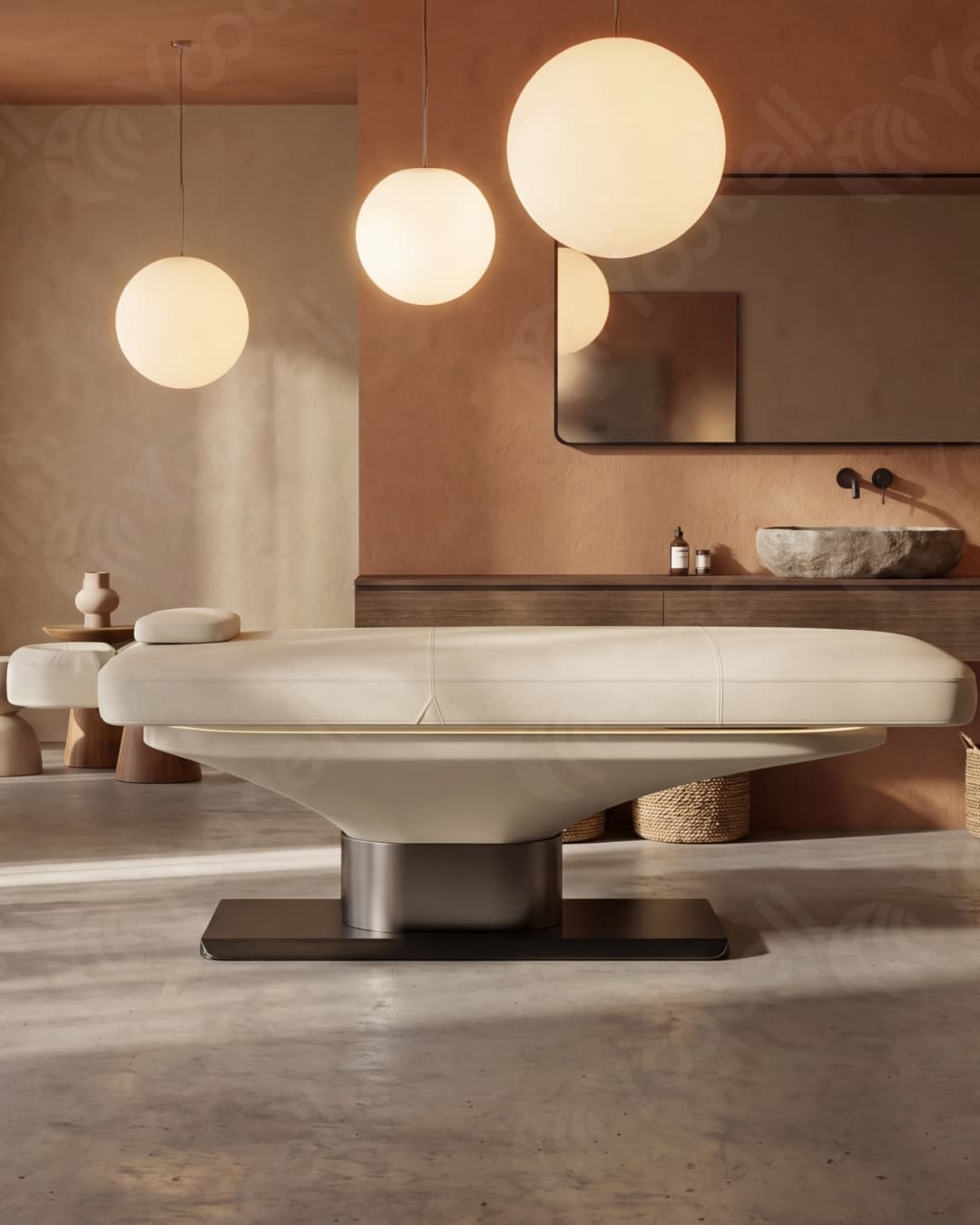
FAQ: Beauty Couch Buying Questions Answered
1. What is a beauty couch used for?
A beauty couch is used for facials, waxing, lashes, massage, laser treatments, skincare procedures, and other salon or spa services. Adjustable models support more treatment types in one room.
2. How much weight can a beauty couch hold?
Commercial models often support around 150 kg to 200 kg or more, depending on frame design and motor system. B2B buyers should ask for safe working load data, not just promotional load claims.
3. Are beauty couches comfortable for clients?
Yes, if they use high-density foam, stable support, and quality upholstery. Client comfort improves treatment experience and can support better repeat booking rates.
4. Should I choose a manual or electric beauty couch?
Electric models usually offer better ergonomics, faster setup, and more premium positioning. Manual models may suit smaller budgets or lower treatment volume.
5. Why do salons buy beauty couches factory-direct?
Factory-direct buying can reduce procurement cost, improve customization options, and provide closer access to manufacturing support, especially for bulk or OEM/ODM orders.
6. What should I ask a supplier before placing an order?
Ask about dimensions, weight capacity, motor configuration, upholstery material, QC process, packaging, lead time, spare parts, warranty, and shipping support. Those details matter more than product photos alone.
Final Thoughts
A beauty couch is a core asset for service delivery, client comfort, and operational efficiency. The best choice depends on your treatments, room layout, expected daily usage, and procurement goals. Buyers who focus on total cost of ownership, quality control, and supplier reliability usually make stronger long-term decisions.
In 2026, the market is clearly moving toward smarter sourcing. Data from Statista, Grand View Research, and IBISWorld all point to the same reality: buyers want ROI, durable equipment, and reliable support. For businesses that need factory-direct pricing, OEM/ODM flexibility, customization, global shipping, and professional B2B service, Yoocell offers a practical sourcing partner for beauty equipment and skincare manufacturing projects.