

A professional beauty bed is one of the most important equipment investments in any salon, spa, lash studio, facial bar, or aesthetic clinic. It affects client comfort, treatment efficiency, therapist ergonomics, brand image, and long-term operating cost. For B2B buyers, the right model is not simply about appearance. It is about durability, adjustability, maintenance, customization, and whether the supplier can support your business as you grow.
In 2026, buyers are more data-driven than ever. Industry references from Grand View Research, Statista, and IBISWorld show that salon and spa operators increasingly compare products by lifetime value, treatment-room utilization, service reliability, and total procurement cost. That is why many importers, distributors, and salon groups now prefer factory-direct manufacturing partners over retail-only sellers.
As a beauty salon equipment manufacturer and skincare OEM/ODM supplier, Yoocell works with professional buyers who need factory-direct pricing, stable quality control, global shipping, and customization support. This guide explains how to choose the right beauty bed for your business and what questions to ask before placing a bulk order.
What is a professional beauty bed and why does it matter?
A professional beauty bed is a treatment bed designed for commercial use in beauty and wellness environments. Unlike basic home-use tables, commercial models are built for repeated daily operation, heavier load requirements, easier cleaning, and better adjustment for multiple services.
Typical applications include:
- Facials and skincare treatments
- Lash extensions and brow services
- Waxing and PMU sessions
- Body treatments and spa rituals
- Aesthetic consultations and light device procedures
The right bed can improve both client experience and staff workflow. For example, a well-designed electric model may reduce manual repositioning time by 20% to 30%, which can help increase room turnover and reduce therapist fatigue. In high-volume settings, even saving 5 to 10 minutes per appointment can create a measurable revenue difference over a month.
How to choose the best professional beauty bed for your business
The best choice depends on your service menu, room size, customer positioning, and budget. A lash studio has different needs than a medical spa or a multi-service beauty salon.
When evaluating a model, focus on these core factors:
- Adjustment method: manual, hydraulic, or electric
- Motor configuration: 2-motor, 3-motor, or more for advanced positioning
- Weight capacity: many professional buyers look for 300 to 450 lbs support range
- Bed dimensions: common widths range from 22 to 30 inches
- Foam density and upholstery: comfort plus durability for daily use
- Base stability: important for client confidence and treatment precision
- Cleaning and maintenance: especially for high-turnover treatment rooms
For B2B buyers, standardization also matters. If you operate 3, 10, or 50 locations, consistent sizing, upholstery color, controls, and replacement parts can simplify procurement and maintenance.
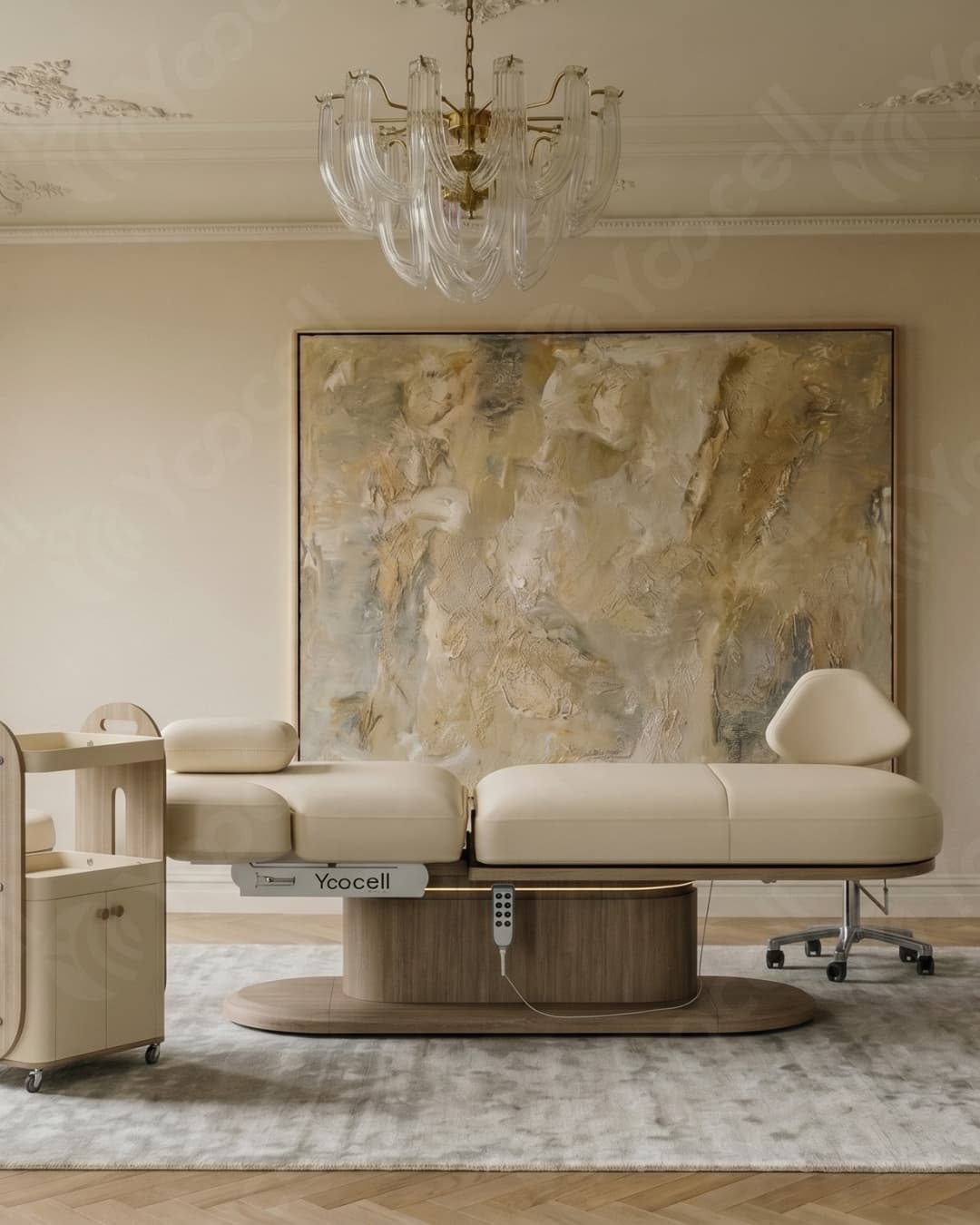
Professional beauty bed features buyers should prioritize
Not every attractive salon bed is suitable for commercial use. Buyers should compare structural and operational details, not just showroom design.
1. Electric adjustment for productivity
Electric models are popular because they allow faster height and angle changes. This is valuable for facials, lash work, PMU, and treatments that require repeated positioning. Although electric beds cost more upfront, many buyers see stronger ROI through labor efficiency and premium service positioning.
2. Ergonomic working height
Therapist posture has a direct impact on comfort and productivity. Beds with adjustable height can reduce strain during long procedures, especially those lasting 60 to 90 minutes.
3. Durable upholstery and foam
Commercial upholstery should resist oils, treatment products, and routine disinfecting. High-resilience foam supports comfort retention over years of use. Low-quality materials may show sagging or cracking in less than 12 to 24 months under heavy traffic.
4. Quiet motor performance
Quiet operation helps maintain a premium service environment. This is especially important in luxury spas and treatment rooms where relaxation is part of the customer experience.
5. Customization options
B2B buyers often need more than a standard catalog item. Common requirements include custom colors, logo integration, matching stools, coordinated salon furniture, special upholstery, or market-specific electrical specifications.
Yoocell supports these practical sourcing needs with manufacturing support, OEM/ODM flexibility, and bulk-order coordination for buyers in different markets.
Factory-direct vs distributor sourcing: which is better?
This is one of the biggest buyer questions. Distributor purchasing may be faster for single-item local orders, but factory-direct sourcing often offers better value for commercial projects, chain expansion, and private label development.
Factory-direct advantages:
- Potential procurement cost reduction of 10% to 25% compared with some distributor channels
- Better customization flexibility for color, materials, branding, and dimensions
- Direct communication on lead times, production, and quality requirements
- Improved support for container orders, project orders, and recurring procurement
- Easier integration with OEM/ODM product planning
According to IBISWorld, buyers increasingly compare factory-direct suppliers against distribution models to improve sourcing efficiency and customization flexibility. That is especially relevant when purchasing multiple treatment beds, matching salon furniture, or building a private brand.
For importers and professional salons, Yoocell offers factory-direct pricing, global shipping, and support for customized projects, making it easier to align equipment purchasing with business goals rather than retail availability.
What quality standards should you check before ordering?
Commercial beauty equipment buyers should always review compliance, manufacturing controls, and documentation. Even when a beauty bed is not classified like a medical device, buyers still use quality systems as trust indicators.
Key standards and signals include:
- ISO 22716 awareness for cosmetic and skincare manufacturing environments
- GMP principles for structured production and quality management
- FDA cosmetic guidance familiarity when sourcing products connected to skincare programs
- Load testing and structural inspections
- Upholstery and component quality checks
- Packaging protection for international shipping
- Clear after-sales and spare-parts policy
If you are sourcing both equipment and skincare products, supplier overlap can create efficiencies. A partner like Yoocell, with capabilities in beauty salon equipment plus skincare OEM/ODM, can help buyers streamline supplier management, branding consistency, and launch planning.
Before placing a bulk order, ask for:
- Product specifications and dimensions
- Material details
- Motor and electrical configuration information
- Production lead times
- Warranty terms
- QC process details
- Shipping method and packing details
How much should a professional beauty bed cost?
Price varies by structure, motor count, finish level, and customization. Entry-level manual models may appeal to startups, while premium electric beds support higher-end service positioning.
Typical B2B pricing considerations include:
- Manual or basic models: lower upfront cost, fewer adjustment functions
- Mid-range electric models: balance between comfort, function, and ROI
- Premium custom models: higher visual impact, advanced positioning, stronger branding potential
Instead of focusing only on purchase price, smart buyers calculate total value over 3 to 5 years. For example, a higher-quality bed that lasts 5 years with fewer service issues can outperform a cheaper option that needs replacement after 2 years. That difference affects not only capital cost, but also downtime, replacement shipping, and customer experience.
Statista notes that salon and spa operators increasingly evaluate equipment by lifetime value and utilization, not just initial spend. If a bed helps position your treatment room for premium facials, lash services, or add-on packages, it may contribute to revenue growth far beyond its purchase cost.
Why customization matters for salons, distributors, and private brands
Customization is no longer limited to luxury buyers. Today, many salons and distributors want products that reflect a unique identity and support better market differentiation.
Common customization requests include:
- Upholstery color matching brand identity
- Custom stitching and finishes
- Logo application
- Matching stools, carts, and salon furniture sets
- Region-specific plugs and voltage
- Packaging customization for distributors or private label projects
This is especially important in competitive local markets where design consistency influences client perception. A coordinated room setup can support premium pricing, improve social media presentation, and reinforce your salon brand across multiple branches.
For distributors and project buyers, customized equipment also creates differentiation that generic marketplace listings cannot easily copy. Yoocell supports OEM/ODM and manufacturing coordination for buyers who need scalable customization, dependable quality control, and global shipping support.
What should buyers ask a supplier before placing a bulk order?
If you are sourcing for a salon chain, importer business, e-commerce brand, or spa project, use a structured supplier checklist. This helps reduce risk and improve decision speed.
Ask these questions:
- What is the bed’s weight capacity and tested load range?
- How many motors does the model use, and what functions are adjustable?
- What upholstery material and foam density are used?
- Can the supplier provide OEM/ODM customization?
- What is the standard lead time for sample orders and bulk production?
- How are units packed for export to reduce transit damage?
- What after-sales support and spare parts are available?
- Can the supplier support mixed orders with other salon furniture or skincare products?
These questions matter because the beauty equipment market continues to grow in 2026, and buyers now prioritize ROI, durability, and after-sales support, as highlighted by Grand View Research. The lowest quote is not always the best deal if replacement cycles, repair issues, or weak support increase total cost.
If you are comparing suppliers now, you can contact the Yoocell team for sourcing support to discuss product selection, customization, and bulk-order planning.
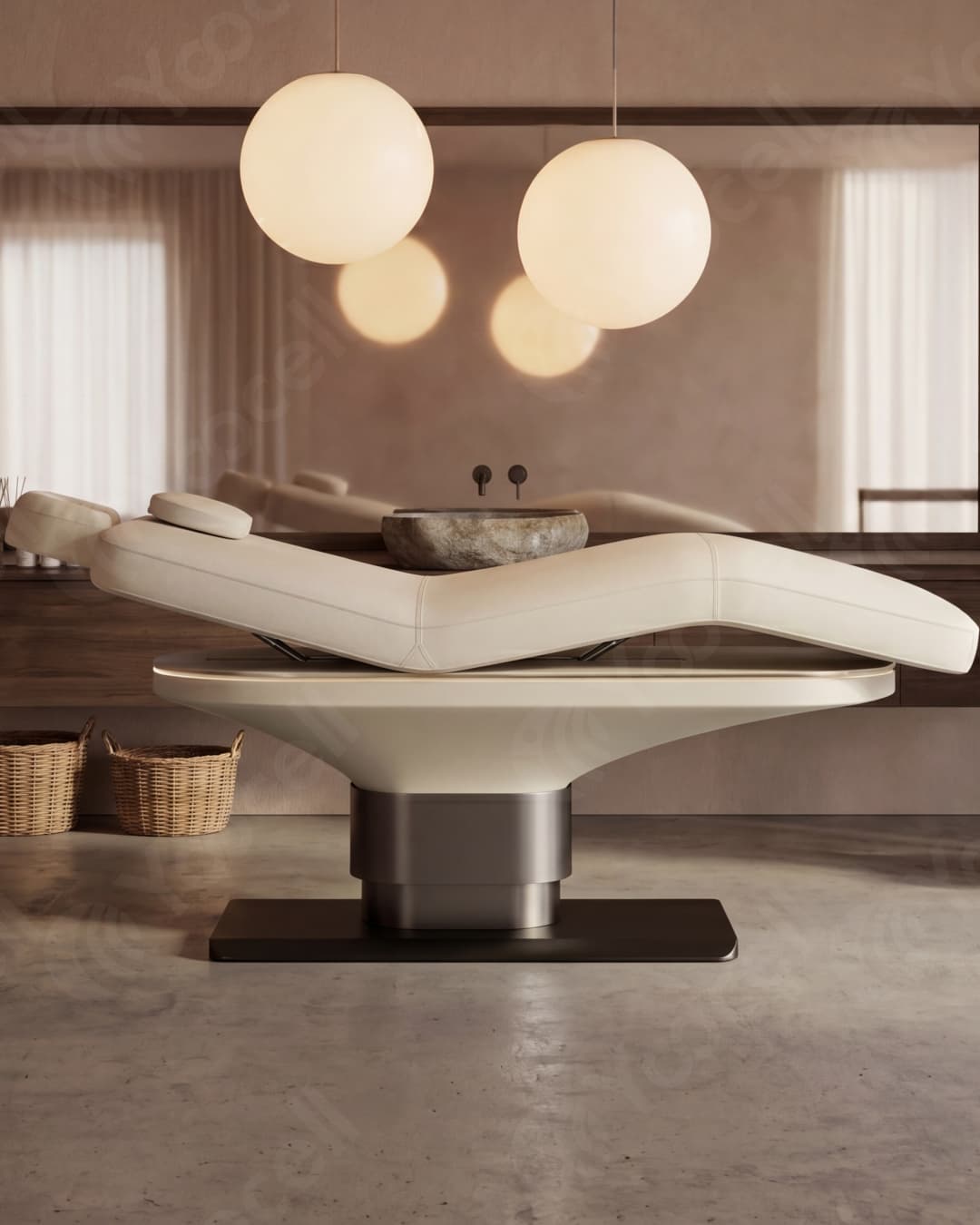
FAQ: professional beauty bed sourcing and buying
1. What is the best professional beauty bed for a salon?
The best option depends on your services. For facials, lash services, and aesthetic treatments, an electric model with height and backrest adjustment is often the most versatile commercial choice.
2. How much weight should a professional beauty bed support?
Many commercial buyers look for a safe working range of 300 to 450 lbs. Always verify tested specifications with the supplier before ordering.
3. Is factory-direct sourcing better than buying from a distributor?
For bulk orders, customization, and better cost control, factory-direct sourcing is often the better B2B option. It can also improve communication on production, QC, and shipping.
4. What materials are best for a beauty bed?
Look for durable upholstery, resilient foam, a stable frame, and easy-clean surfaces. These features support hygiene, comfort, and longer service life in busy salons.
5. Can I customize a professional beauty bed with my brand?
Yes. Many manufacturers offer OEM/ODM customization, including colors, logo application, matching furniture, and packaging adjustments for distributors or private labels.
6. What certifications or standards should I ask about?
Ask about quality control processes, product documentation, load testing, and supplier familiarity with standards such as ISO 22716, GMP, and relevant FDA guidance when sourcing connected skincare solutions.
A professional beauty bed is more than salon furniture. It is a business asset that affects treatment quality, staff comfort, room efficiency, and brand presentation. Buyers who compare construction, ROI, supplier reliability, and customization options usually make stronger long-term decisions than those who shop on price alone.
For salons, distributors, and private label buyers looking for factory-direct pricing, OEM/ODM support, global shipping, and dependable quality control, Yoocell offers a practical manufacturing partnership for professional growth.