

An adjustable beauty bed is no longer a simple salon fixture. For modern spas, esthetic clinics, lash studios, and distributors, it is a productivity tool that affects treatment quality, staff comfort, room turnover, and long-term operating cost. Buyers now compare adjustability, durability, maintenance, and sourcing model with far more scrutiny than they did a few years ago.
In 2026, the professional beauty equipment market continues to grow, and buyers increasingly prioritize ROI, durability, and after-sales support, according to Grand View Research. At the same time, salon and spa operators are evaluating equipment based on lifetime value and treatment-room utilization, a trend also reflected in Statista industry reporting. That means choosing the right bed is not just about comfort. It is about revenue efficiency.
For B2B buyers, sourcing from a manufacturer such as Yoocell can also improve margins through factory-direct pricing, OEM/ODM flexibility, and better customization options. This guide answers the core questions buyers ask before purchasing an adjustable bed for beauty treatment environments.
What is an adjustable beauty bed and why does it matter?
An adjustable beauty bed is a treatment bed designed to change height, backrest angle, leg position, or full client posture to support different services. Depending on the model, adjustments may be manual, hydraulic, or electric.
That flexibility matters because one bed may need to support multiple services in a single day, including facials, lashes, brows, PMU, waxing, skin analysis, or light medical-aesthetic treatments. A fixed bed can limit workflow. An adjustable model improves ergonomics for both technicians and clients.
- Height adjustment helps reduce bending and shoulder strain for staff.
- Backrest adjustment supports facials, consultations, and semi-reclined treatments.
- Leg-rest adjustment improves comfort during longer sessions.
- Multi-motor electric systems allow faster repositioning between services.
For example, a 3-motor bed can usually adjust height, backrest, and leg rest independently. That can cut setup time by 10% to 20% per client compared with manual repositioning in high-volume treatment rooms. Over hundreds of monthly appointments, that efficiency compounds into measurable revenue impact.
How to choose the right adjustable beauty bed for your business
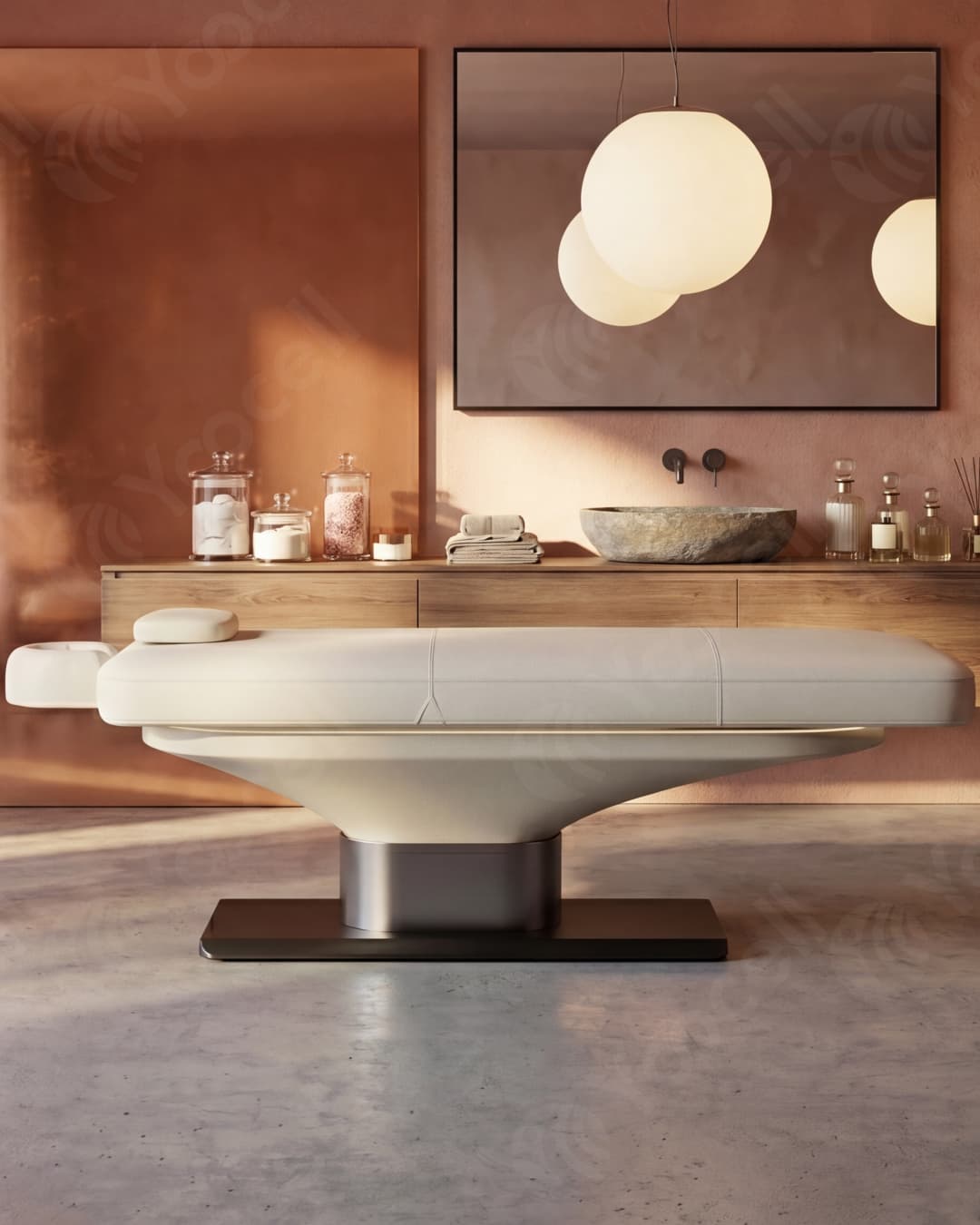
The best choice depends on your treatment menu, budget, target client experience, and sourcing strategy. There is no one-size-fits-all model for every salon or spa.
Buyers should evaluate these points first:
- Service type: Lash studios may prioritize backrest angle and cushioning, while facial clinics often need full electric controls.
- Daily usage volume: A room handling 8 to 15 clients per day needs stronger frame stability and more reliable actuators.
- Technician ergonomics: Adjustable height range should support different operator heights and seated or standing workflows.
- Cleaning and materials: PU leather, seamless upholstery, and stain-resistant surfaces reduce cleaning time.
- Weight capacity: Commercial-grade beds commonly support 150 kg to 200 kg, which is an important baseline for diverse client use.
- Power and compliance: Electric models should match local voltage and come with clear technical documentation.
A practical benchmark is bed lifespan. Well-built commercial models can remain serviceable for 5 to 8 years with proper maintenance, while lower-grade retail models may show wear much earlier under daily salon use. This is one reason B2B buyers often compare factory-direct suppliers with retail channels.
According to IBISWorld, beauty businesses increasingly compare factory-direct procurement against distributor purchasing to reduce procurement cost and improve customization flexibility. In many cases, factory-direct sourcing can reduce purchase cost by 15% to 30%, especially for bulk orders.
Manual, hydraulic, or electric: which adjustable beauty bed is best?
This is one of the most common buyer questions, and the answer depends on operating model and expected return.
Manual beds are the lowest-cost option. They suit startups, training centers, or businesses with limited service variation. However, manual repositioning is slower and less convenient during treatment transitions.
Hydraulic beds provide smoother height adjustment and better professional ergonomics. They often offer a good middle ground between cost and function. For salons that perform facials, brows, and basic spa services, hydraulic systems can be a solid value choice.
Electric beds are usually the best fit for high-service environments, premium treatment rooms, and multi-service clinics. A 3-motor or 4-motor setup allows precise positioning, stronger client comfort, and more efficient technician workflow.
Here is the practical breakdown:
- Manual: lower upfront cost, higher labor friction
- Hydraulic: balanced investment, improved ergonomics
- Electric: highest efficiency, premium experience, best for heavy daily use
If a treatment room generates $80 to $150 per appointment, saving even 5 minutes per session can improve daily scheduling capacity. Across 6 to 10 clients per day, that can create meaningful annual revenue gains that justify a higher-priced electric model.
What features should B2B buyers prioritize first?
When buyers search for the best adjustable beauty bed, they usually compare aesthetics first. That is understandable, but the stronger buying criteria are structural and operational.
Start with these priorities:
- Frame strength and weld quality for commercial durability
- Motor reliability and replacement support
- Foam density for long-session comfort without sagging
- Upholstery quality for stain resistance and easy sanitation
- Stable base design to reduce wobble during treatment
- Customization options for color, branding, dimensions, and accessories
- After-sales support for spare parts, troubleshooting, and freight coordination
For importers, distributors, and private-label buyers, documentation also matters. Trust signals such as ISO 22716, GMP awareness, and familiarity with FDA cosmetic guidance can indicate a supplier that understands broader beauty-industry compliance expectations. While a beauty bed is not the same as skincare production, buyers sourcing across categories often prefer partners with mature manufacturing systems.
This is one reason Yoocell is relevant for B2B procurement. As a beauty salon equipment manufacturer and skincare OEM/ODM supplier, Yoocell supports buyers who want product quality, customization, and manufacturing support in one supplier relationship.
How much does an adjustable beauty bed cost, and what is the ROI?
Commercial pricing varies widely depending on structure, motors, materials, and customization. Based on current market observation from competitor listings and category pricing, entry-level manual or basic adjustable beds may start around $400 to $700. Mid-range hydraulic or partial electric models often land around $1,200 to $1,900. Premium 3-motor commercial beds frequently range from $2,300 to $5,100 or more.
Price alone does not show value. B2B buyers should calculate cost per year of service and cost per treatment.
For example:
- A $1,800 electric bed used for 6 years costs about $300 per year.
- At 250 working days per year, that is roughly $1.20 per day.
- If the bed supports 8 clients per day, equipment cost is about $0.15 per client.
That math is why professional buyers focus on reliability and room efficiency instead of only upfront price. A cheaper bed that fails early or creates workflow delays often costs more over time.
Statista reporting shows operators increasingly assess equipment by service reliability and treatment-room utilization. In practical terms, an adjustable bed that improves turnover, comfort, and technician posture can deliver ROI faster than a low-cost alternative.
Factory-direct sourcing from Yoocell can strengthen that ROI further by helping buyers lower procurement cost, especially on project orders, chain rollouts, or bulk purchasing programs.
Why do many buyers source adjustable beauty beds factory-direct?
Factory-direct procurement gives buyers more control over specification, branding, and margins. This matters for salon groups, resellers, importers, and OEM/ODM buyers that want a differentiated product line.
Common factory-direct advantages include:
- Lower procurement cost than many distributor or retail channels
- Customization for upholstery color, stitching, base finish, dimensions, and logo application
- Bulk order support for franchise expansion or wholesale distribution
- Global shipping coordination and export packaging
- Direct communication on lead times, spare parts, and production updates
For growing salon brands, customization is not only visual. It can also include bed width, headrest structure, motor configuration, or accessory package. These adjustments help align equipment with signature services and brand positioning.
Yoocell supports this model with factory-direct pricing, OEM/ODM flexibility, global shipping, and quality control processes designed for B2B buyers. That is especially useful for companies sourcing both treatment equipment and skincare lines through one manufacturing partner.
If you are comparing suppliers for a project, bulk order, or private-label requirement, you can contact the Yoocell team for specifications, customization options, and sourcing support.
What should you verify before placing a bulk order?
Before approving a sample or production run, buyers should confirm technical, commercial, and service details in writing. This reduces surprises after shipment.
Use this pre-order checklist:
- Adjustment functions: Confirm height range, backrest angle, leg-rest movement, and control type.
- Dimensions: Verify overall bed length, width, and room fit.
- Load capacity: Request tested weight limit and frame details.
- Material specs: Ask about upholstery grade, foam density, and base materials.
- Voltage and plug type: Match destination market requirements.
- Packaging: Confirm carton protection, pallet options, and freight method.
- Lead time: Production can vary from 20 to 60 days depending on customization volume.
- Spare parts and warranty: Clarify parts availability and response process.
- Compliance documents: Request product documentation relevant to your market and procurement standards.
For importers and distributors, quality consistency is often as important as initial sample quality. Buyers should ask how the supplier manages inspections, component sourcing, and final QC. Strong quality control is a core part of protecting margins and customer satisfaction.
That is another reason many professional buyers prefer experienced manufacturers such as Yoocell, where manufacturing support and after-sales communication are part of the sourcing process rather than an afterthought.
FAQs about adjustable beauty beds
1. What is the best facial bed for estheticians?
The best facial bed for estheticians is usually an electric or hydraulic adjustable model with height control, a reclining backrest, strong cushioning, and easy-clean upholstery. For busy treatment rooms, a 3-motor bed often offers the best balance of comfort and workflow efficiency.
2. Are beauty beds comfortable?
Yes, high-quality beauty beds are comfortable when they use dense foam, stable support, and smooth adjustment. Electric models are often more comfortable because they let staff reposition the client quietly and precisely during longer treatments.
3. Can lash beds be adjusted?
Yes, many lash beds include adjustable height, headrest, backrest, or leg support. For lash studios, adjustability helps technicians maintain better posture and helps clients stay comfortable during sessions that may last 1.5 to 3 hours.
4. Is a manual or electric adjustable beauty bed better for a salon?
Electric beds are better for high-volume salons and premium service rooms because they save time and improve ergonomics. Manual beds are more affordable, but they are usually better suited to lighter usage or tighter startup budgets.
5. How long does an adjustable beauty bed last?
A commercial-grade adjustable beauty bed can often last 5 to 8 years or longer with proper maintenance. Lifespan depends on motor quality, frame construction, daily usage, and upholstery care.
6. Why do B2B buyers choose OEM or factory-direct suppliers?
B2B buyers choose OEM or factory-direct suppliers to reduce procurement cost, improve customization, and simplify bulk ordering. This approach can also provide better production visibility, direct after-sales support, and stronger private-label opportunities.
An adjustable beauty bed should be selected as a revenue-producing asset, not just a furniture item. The right choice improves technician efficiency, enhances client comfort, supports service expansion, and lowers long-term replacement risk.
For salons, spas, distributors, and private-label buyers, the strongest procurement decisions come from comparing functionality, lifecycle cost, customization options, and supplier capability together. With factory-direct pricing, OEM/ODM support, global shipping, and quality-focused manufacturing, Yoocell is positioned to support buyers who want both commercial value and long-term supply reliability.